


The Greek tv show Maestro was shot mainly on Paxos. It’s one of the most expensive shows ever made in Greece, a preposterous thing in which romantic interest is provided by a beautiful teenage girl and a man old enough to be her father, the sort of age gap old Hollywood movies used to fetishise. But really, the star of the series is Paxos. It’s a glorious commercial, shot in thick, summer colours. The show has been a success for Netflix worldwide. What’s interesting though, is the level of success in Greece itself. It might be surprising to foreigners, who imagine the Greek Islands to be their special holiday places, who unconsciously believe themselves to be the most susceptible to all those captivating images of blue and white decorated with climbing bougainvillea, to learn that the Greeks themselves are quite capable of going soft at the knees when presented with similar representations of the life they could be living.
***
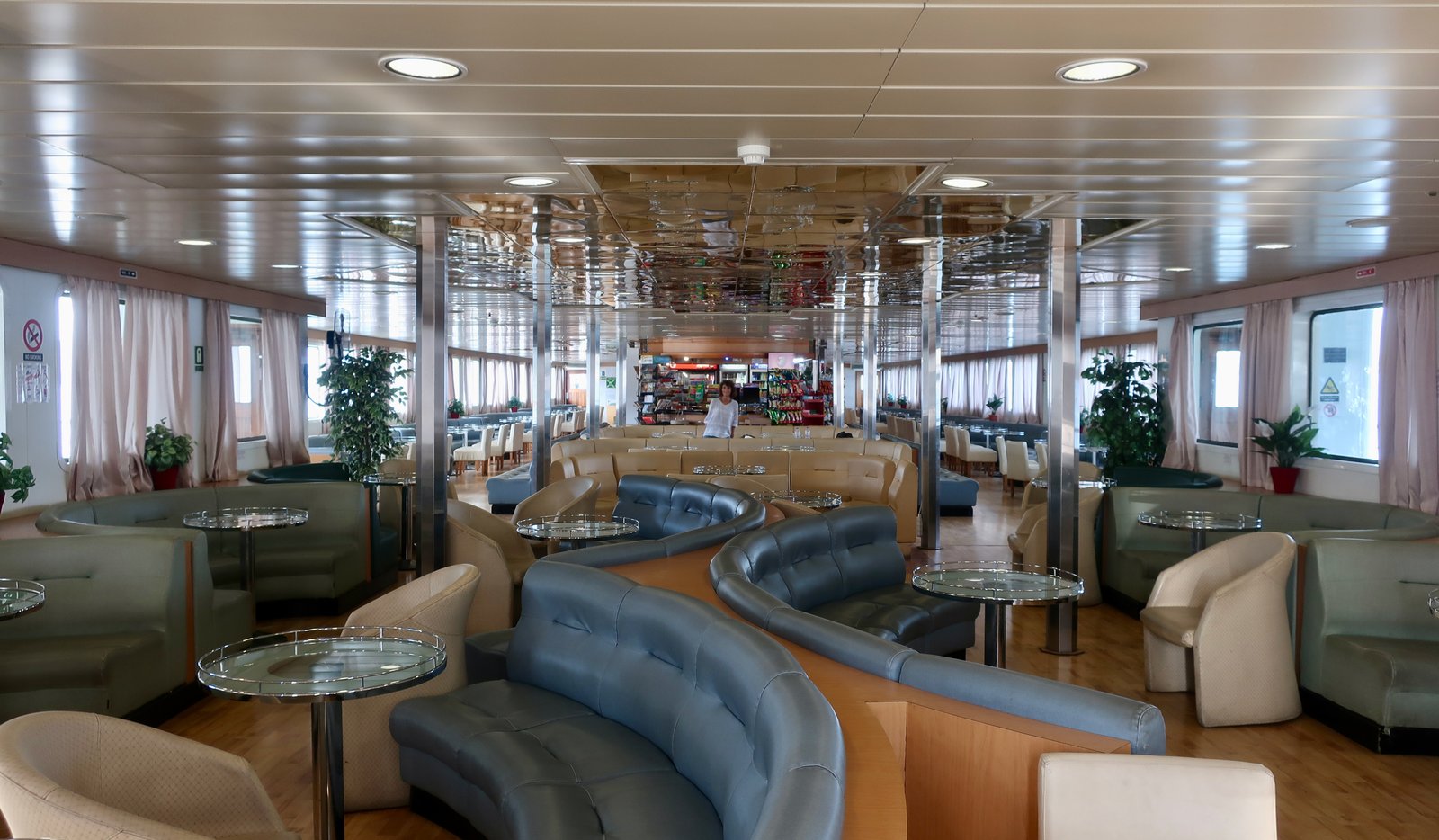
Real estate on Paxos is among the most expensive anywhere in Greece. In this very obvious way Paxos is already a victim of its own loveliness. Still, no big resorts, no high-rise hotels, no mass tourism. Accommodation in the high season is likely a bit more expensive than Greek-island-standard, although on average not expensive like London or Dublin or Copenhagen. But away from the high season, the same unbelievable truth applies to Paxos as to almost everywhere else in the islands: hardly anyone goes. Not many years ago on the ferry over, October 5th, weather perfect, sea water still swimmably warm after the heat of summer, we quite literally had the whole ship to ourselves.
***
The Ionian islands in general, the northern pair of Corfu and Paxos in particular, are less concentratedly Greek than the islands of the Aegean. Four hundred years of Venetian dominion over the Ionians has left its mark. Paxos and Corfu – and in varying degrees all the others – are a little like Greekitalian islands. In the case of Paxos, its Italian history, but more importantly its proximity to Italy and its exceptional sweetness, has made it popular with Italians, tourists and second-homers. There are contingents of others too, especially Brits. They had the Ionians for much of the 19th century. Besides, the greenness, the just-so prettiness; there’s a softness to the Ionians that corresponds to a certain British aesthetic.
***

Most people live in the three main villages, all of them ports, each one distinct. There’s Gaios, the capital, in a bay almost fully stoppered by the Island of Agios Nikolaos, so that sea-access to the town is through a two-ended channel that provides safe, picturesque mooring for fishing boats and yachts. It’s a relaxed little place, with little of the snazziness one might expect.
Lakka, at the top of the island, sits at the head of a broad bay that bends like a sock into the land. It’s popular with yachts. When we were there a couple of small flotillas, squadrons of four or five boats being led around the northern Ionians, came in for a day or two, taking advantage of typically good early autumn weather and off-season tourist calm.
In the morning you can swim a circuit of the bay. It comes out at somewhere between one and a half and two kilometres, depending on how closely you stick to the shore, how far out you go before crossing the mouth. We’ve done these bay-circuits all over the islands, sack-shaped swims with somewhere a breaking-out away from coastal rocks into deeper water. The point at which we leave the shore always feels more like a leap into the unknown, a jump, than a simple change of direction.
The third settlement, Loggos, is even more comely than the other two; another rounded bay, twenty or thirty colourful buildings almost on the water, a few dozen among the trees on the slopes behind.

The municipal bus comes down here, to the end of the tiny road that runs along the seafront in front of a line of tavernas and bars. There’s so little space for it to pass that its wheels skim the very edge of the road. From inside the bus, even when trying to look straight down for a view of the road, there’s nothing but water.
***
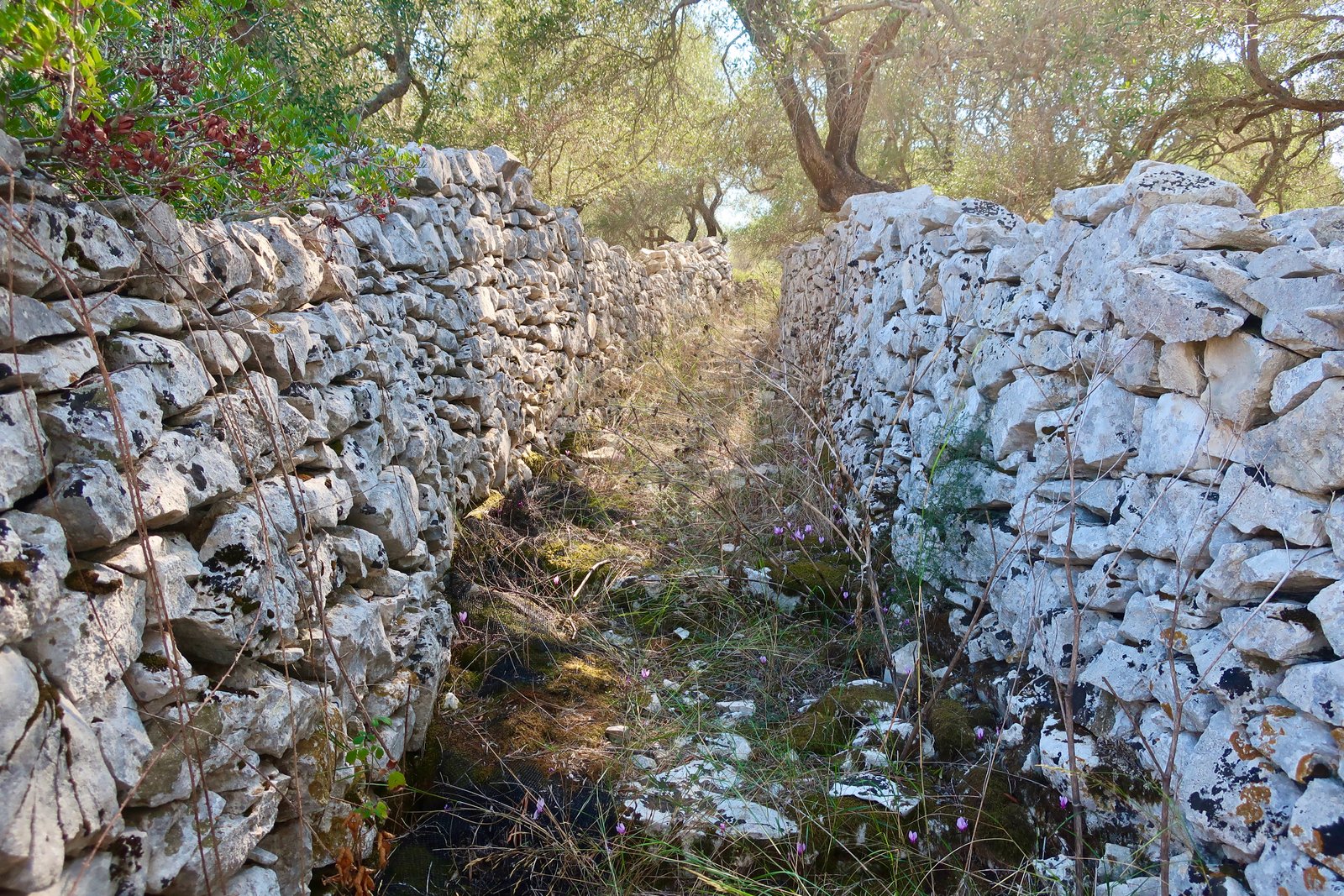
Most of the island is still covered in olive trees, somewhere between a quarter and half a million. Even with the rise of tourism, olive oil remains an important source of income. The trees are the same variety as in Corfu and in most of the other Ionian islands, taller than those in the Aegean. Their trunks are thinner, pockmarked, witchy. If you walk on Paxos you’ll spend much of the time walking through light that filters through the crowns of these trees. It might be that the continuation of the production of olive oil has helped keep Paxos grounded, despite its exceptional prettiness dragging it towards exclusivity. There’s nothing more traditional, more ancient, more deeply rooted.
***
Antipaxos is a condensed version of Paxos. Even the shape of it, even the angle – it’s a ripple off the southern end of Paxos, a shadow. Little more than three kilometres long, barely a kilometre wide, there’s not much to it. We went there one early October day on an ex-fishing boat that now does day-trips for tourists. The skipper, knowing only one way to do his new job, played rock n’roll turned up loud, just as if it was summertime and his little boat was full of a different kind of punter, not our little out-of-season bunch.

There are at least two beaches on Antipaxos that beach-purists put on the short list of best in the Med. White sand, dazzlingly turquoise water, dark vegetation to frame them. More like the Pacific or the Caribbean.
If you go to Antipaxos in August you’ll have company, sun-beds and parasols, the bays full of day-trip boats and yachts. In the first week of October though, there might be just that couple suntanning on one end of the beach, another pair with broad sunhats moseying around, someone doing head-high breaststroke in the water.
Looking at it on a satellite map, most of the island is covered in a regular sward of snooker-table green. Only down the centre around the few dozen houses has the green been shaved bare in patches. Here, instead of the olive trees of Paxos, there are vines. On tiny Antipaxos they make wine, white and red.
No-one lives there all year round. There’ll be visits to tend the vines. A few holiday homes. A couple of in-season tavernas for the day-trippers.
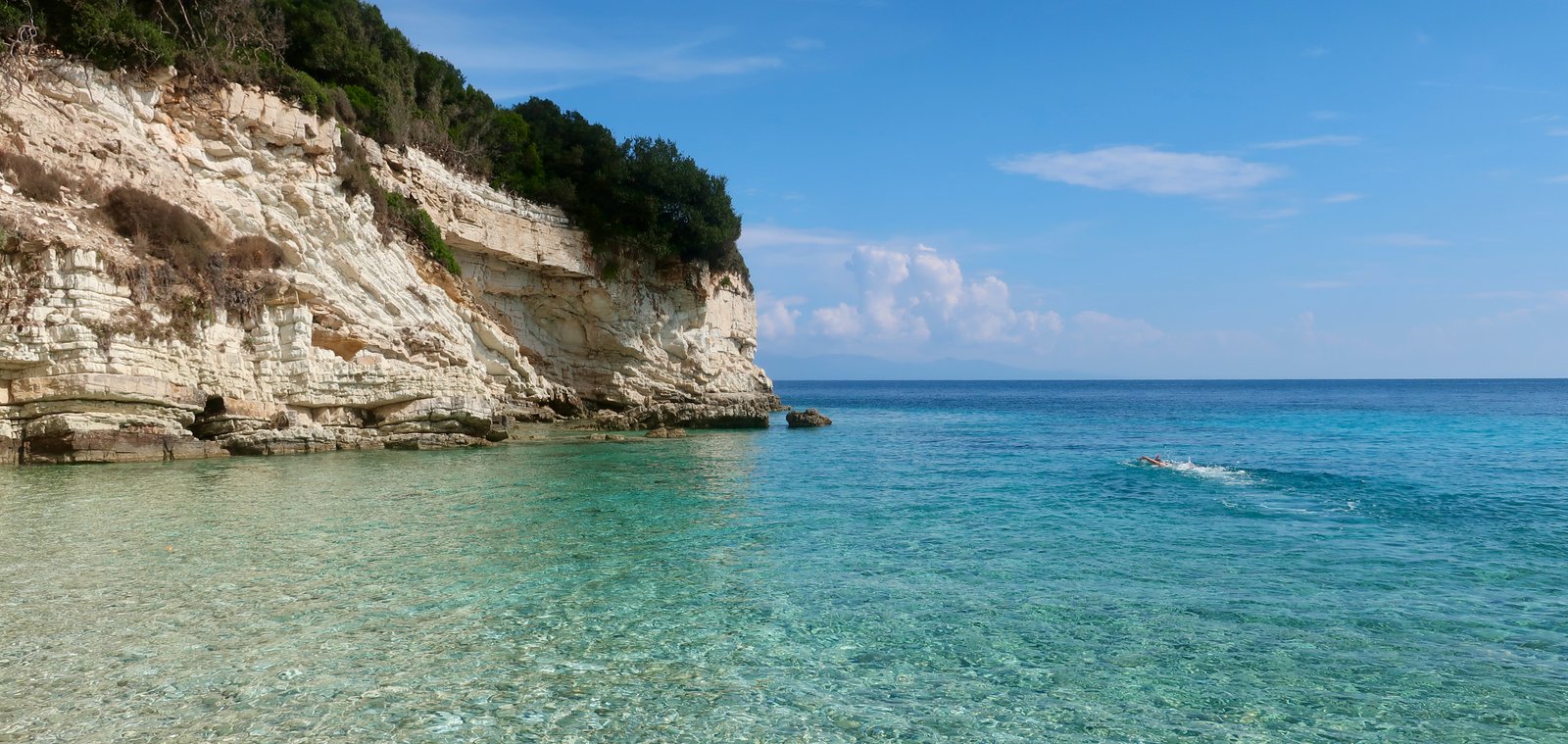
Antipaxos is like Paxos but with the contrast turned up even higher. It’s really the strawberries and cream of Greek islands, the black forest gateau. But what to do with such a thing?
HIKING

On Paxos, only ten kilometres long and no more than three wide, there are 50 kilometres of trails. They’re scrawled all over. You might imagine they aren’t proper trails but you’d be wrong. It’s true that there are no iron-hard stone paths carved across the flanks of mountains – the high-point is not much over 200 metres – and that there are no stark passages through remote valleys where hardly anything but thyme grows. There’s never even a moment you’re lost in the wilderness at a tiny, ruined church with goat and sheep pellets the only evidence that anything’s been there in living memory. Instead Paxos is yet another riff on the theme of Mediterranean-islands-with-thousands-of-years-of history-and-rugged-terrain – although here less rugged than most – where communication around the island was historically effected on painstakingly-constructed stone paths, and exclusively on foot or on donkey-back. The trails on Paxos make a labyrinth of walled stone passageways through mostly olives, occasionally pine, and are so well-made they’re like some giant game, channels through which stone ball-bearings might be rolled.
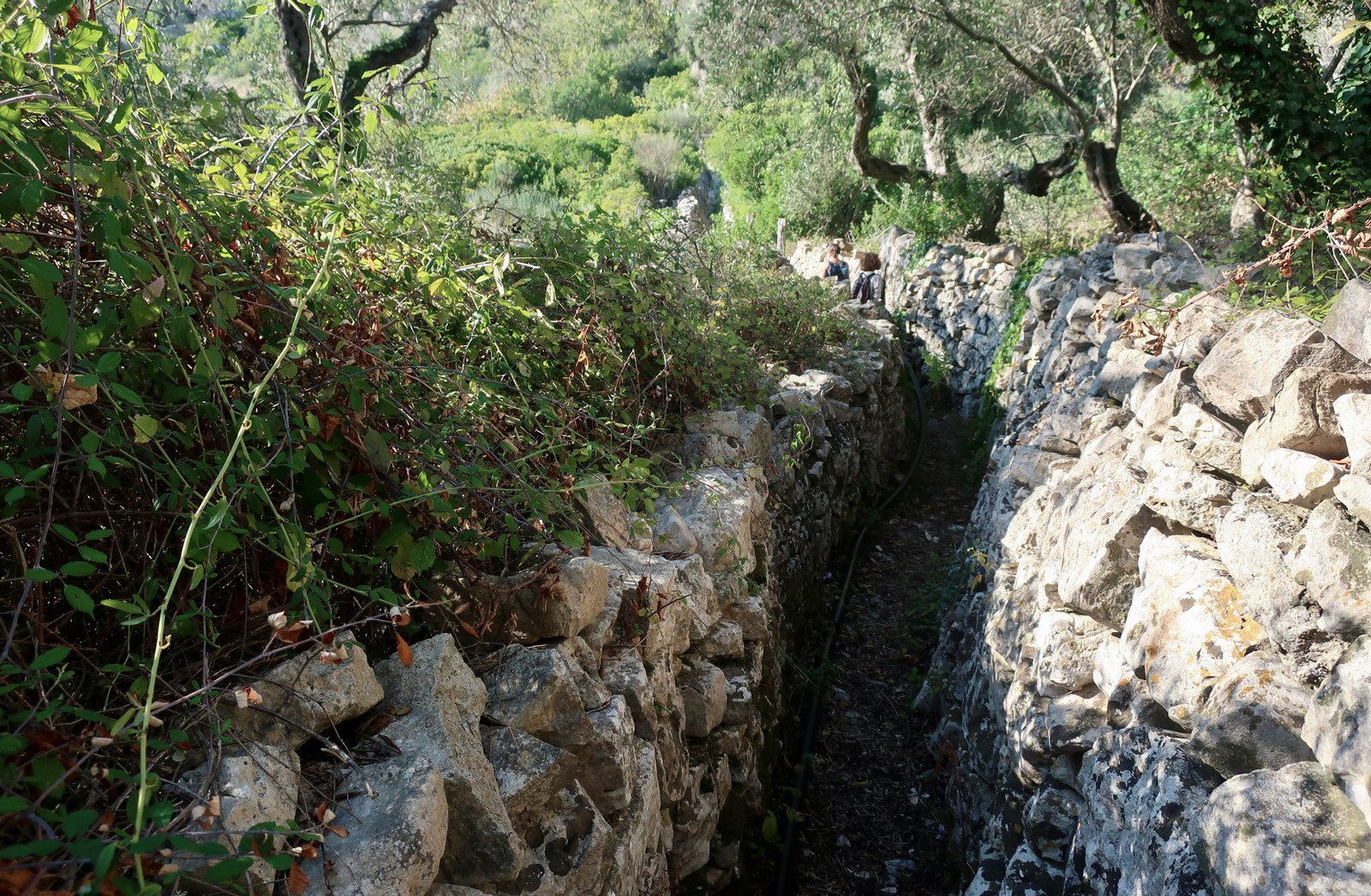
Not all the trails are circular, but they can be joined, each to each. Even the path that goes the whole way from top to bottom is only 10.3 kilometres long. You can do it in a couple of hours, have a swim, a coffee, lunch, read your book, whatever, then wander home the same or some other way.
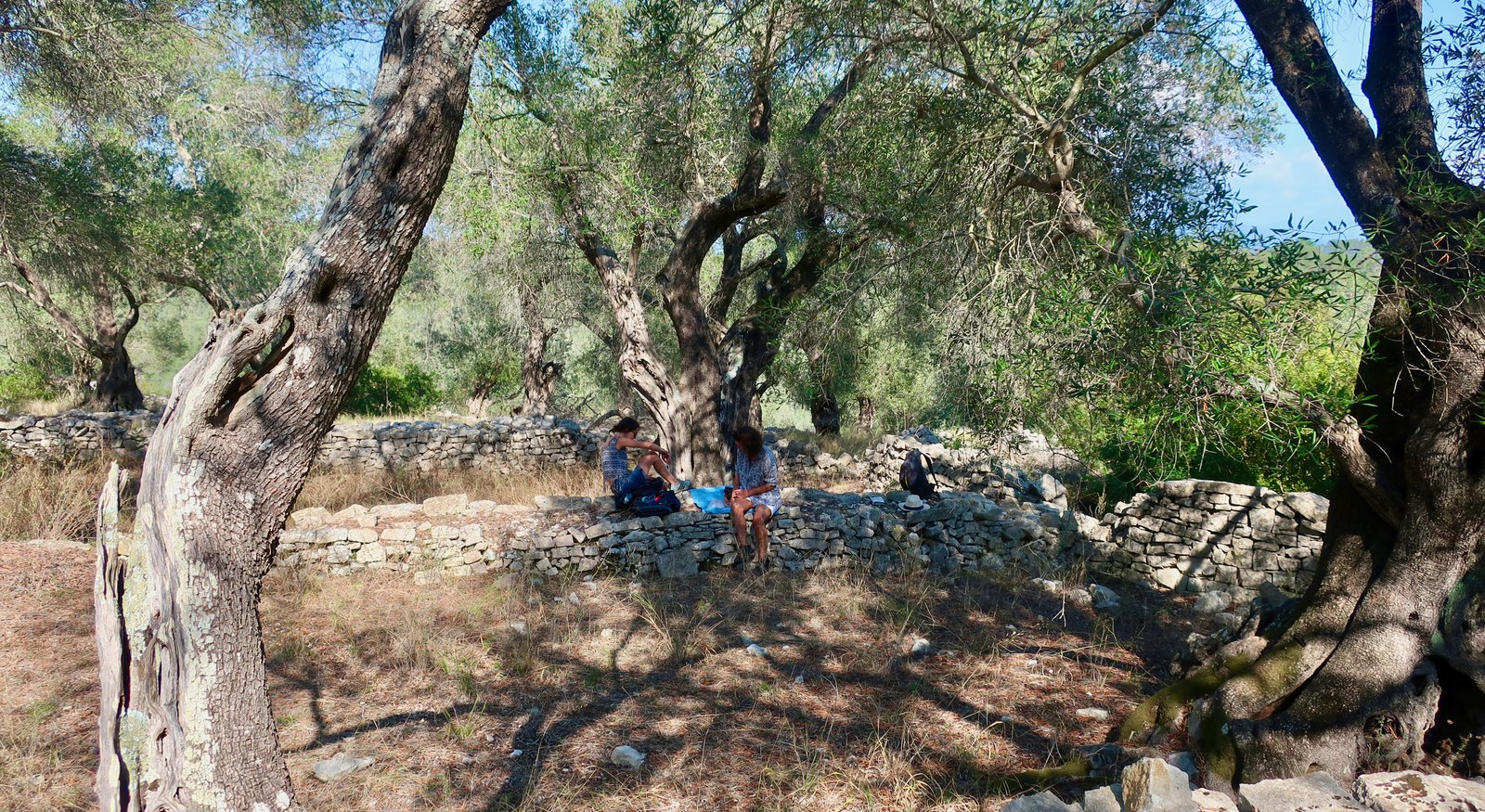
Islands tend to impose their own rhythm. On Samos you have to be up before dawn to make the 1400 metres to the top of Mt Vigla and a 30-kilometre loop. On Kalymnos there are various passages that demand extreme caution. On many islands there’s not just distance but also the unknown – will the path be signed? will we be able to find it? can we get it done before dark? On Paxos though we set off with hardly a plan. We leave home with the map and a rough idea, walk a while, stop for coffee, change direction, head for a beach and swim. We picnic among the olives, decide to stroll to the west coast where there are trails that come to the very edge of heartstoppingly vertical cliffs, or back to the gentler east, to the beaches and bays. We change idea again and head into Loggos.
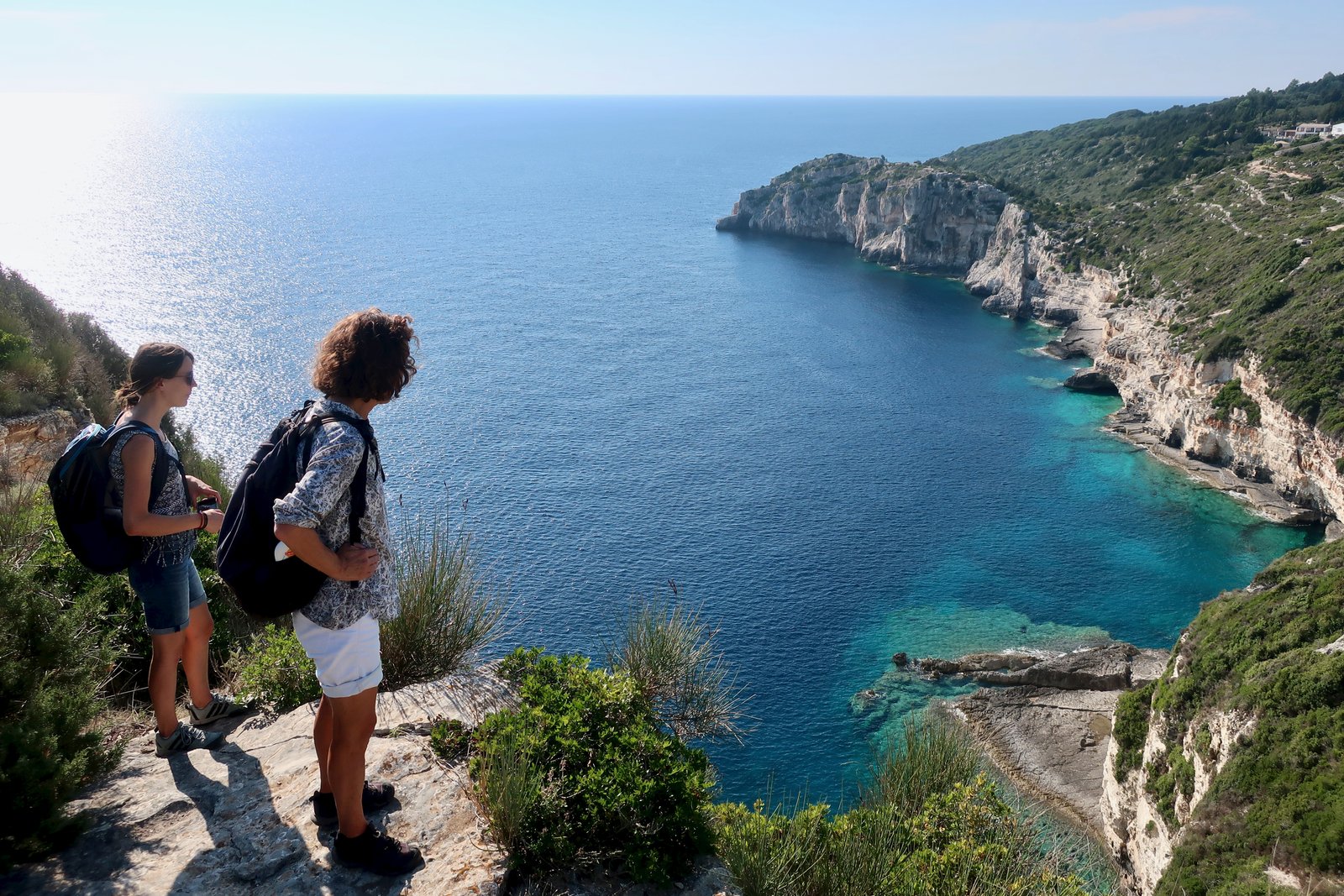
And for much of the time, because there are so many olive trees, because they’re much taller, more airy, than the olive trees in the Aegean, and the crowns of individual trees have often lightly grown together, rather than walking through orchards where fruit trees tend to be separated from their neighbours, one walks through a thin forest of olive. The sun shines through the treetops. The leaves like dusky confetti are just enough to filter the light and turn it into something you can wade through.

On a week-long holiday you could walk absolutely everywhere and get to know all the trails. If you’re an experienced hiker, you might set off a little later than usual. One day you’d go to Antipaxos and walk from north to south and back, exploring all the beaches and coves along the way, passing two dumped cars in the forest that have become so much part of the décor that all the metalness has been drained from them and they’ve become organic now. In general, you might linger a little longer than usual, making a game of trying to get to as many out-of-the-way beaches as you can – being on foot opens up such opportunities for getting to places that other people will never see. You might wish that for once you had a picnic basket to unpack, with a proper picnic to spread out. You might even hike with a book in your bag. That really would be something.
***
Much has changed in the islands, but even with the tourist-tumult of the last few decades, there’s also resistance to change that comes from the constancy of geographical and societal isolation. Islands are worlds unto themselves. Left to themselves, they move so slowly.
In Loggos we met an Australian guy who was in Paxos as a young traveller in 1974 and had finally come back more than forty years later. One night back then, he told us, he had had too much to drink and set about ringing the church bell. The disapproving local law enforcement official put him in the cells overnight to sleep it off.
When, a couple of days before we met him, he recounted this story in a taverna in Loggos, the woman he was speaking to recognised the gaoler as her father, by then ninety-two years old. The Australian told us this and he was wanting to laugh and cry at the same time. All this distance, all these years. Sitting there, eyes glazed, his whole life passing before him.