
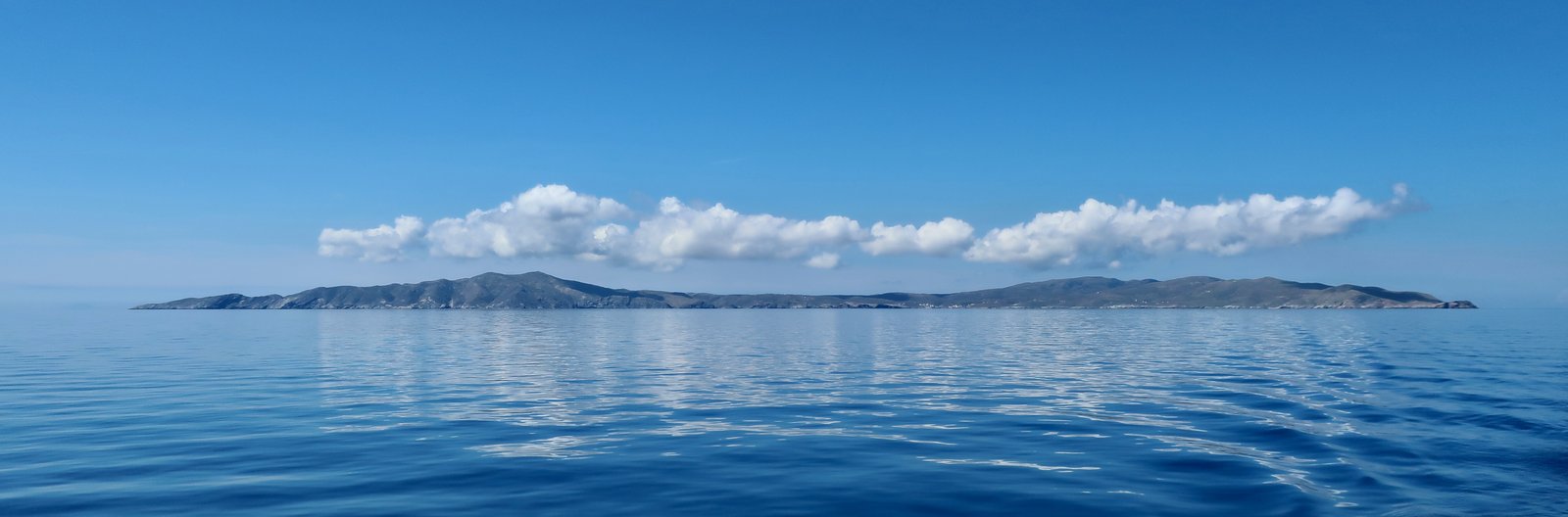
Not so long ago all Greek islands were meshed by networks of stone-laid paths. Because of the islands’ unique geography – having been formed by intense volcanic and tectonic activity, the terrain is generally rocky and steep – wheeled vehicles, carts, were almost never practical. The paths that were constructed, the highways along which all life moved, were built for man and donkey.
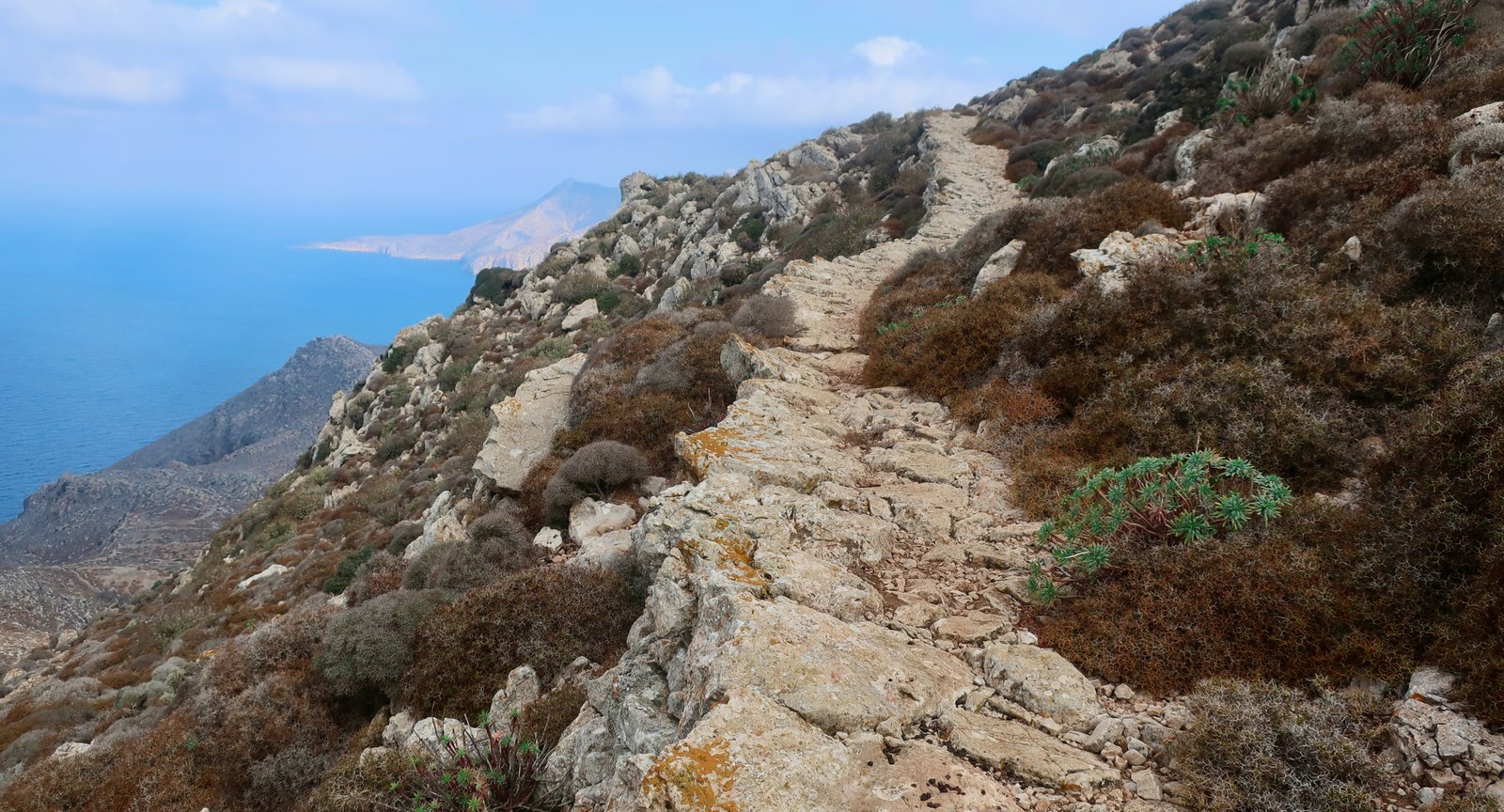
Karpathos
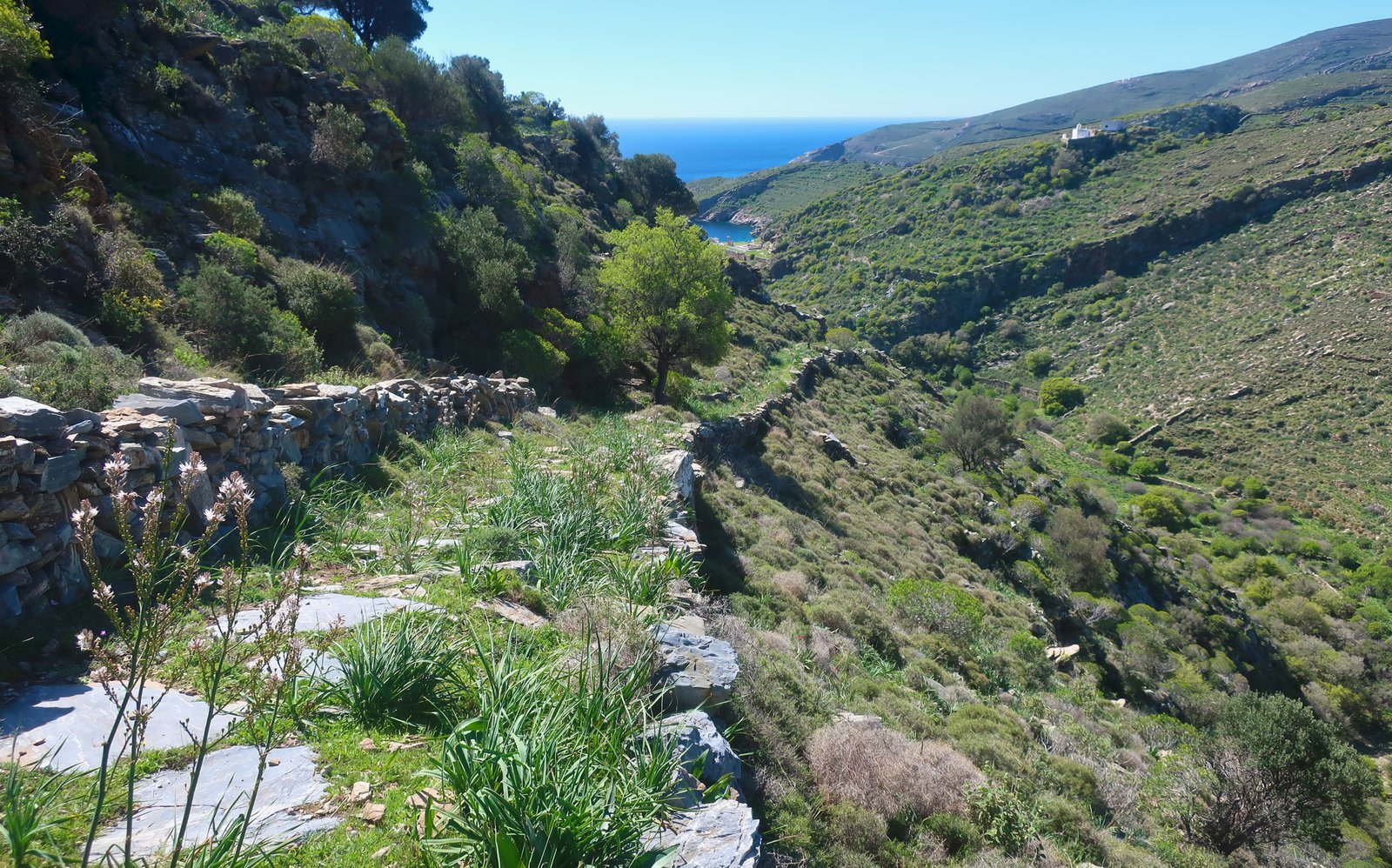
Kea
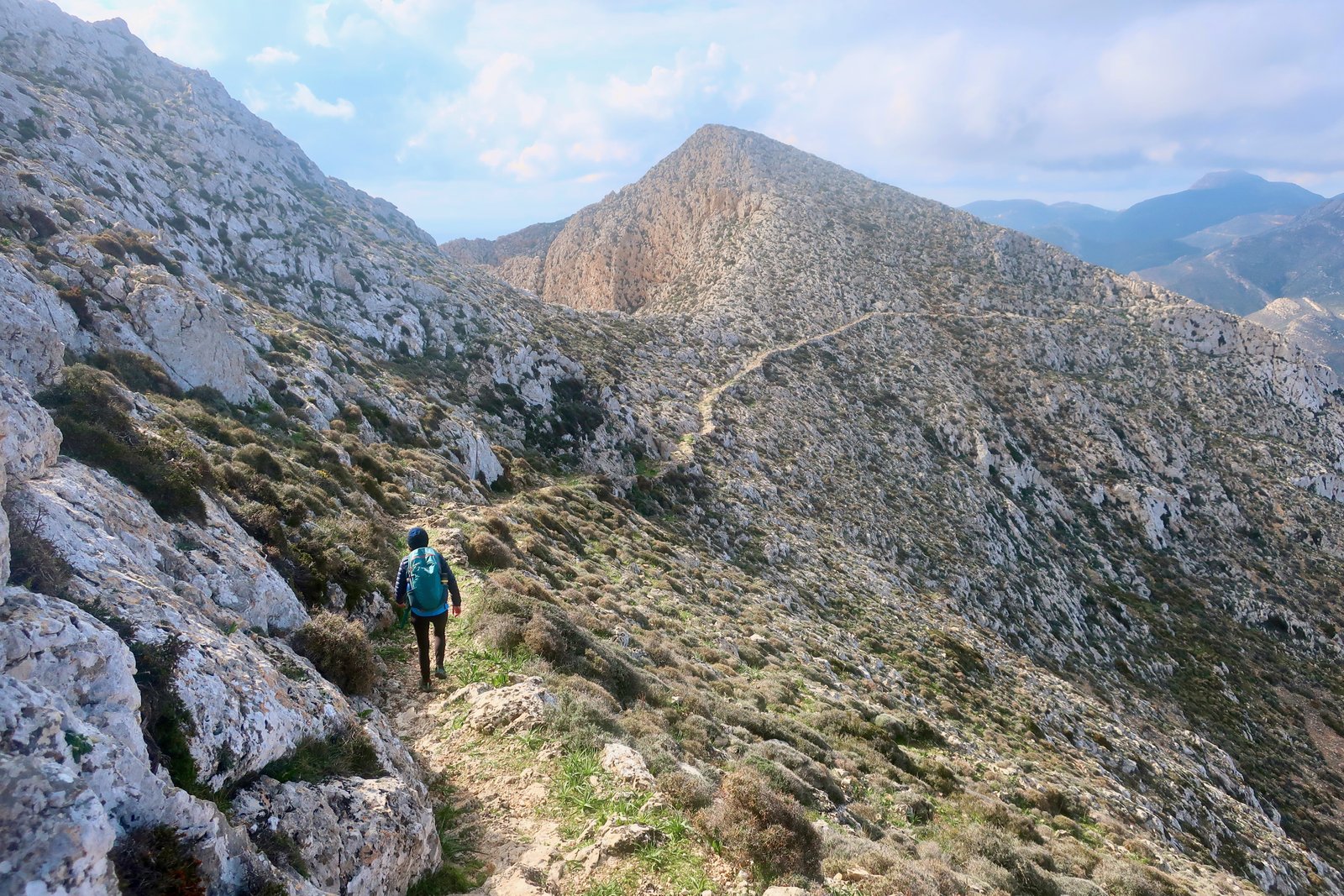
Anafi
Paths to water, paths to work – work was overwhelmingly agricultural – paths to church and monastery. Paths to other villages. Paths down to the sea. The level of sophistication of each was dependant on the number of people who used it and the number of people available to help in construction. But also the type of stone available. Not all islands are made of the same stuff. What remains of the countless ancient sites is dependant among other things on the nature of the building material. Over long centuries, some types of rock are dissolved by wind and water. Other are seemingly indestructible.
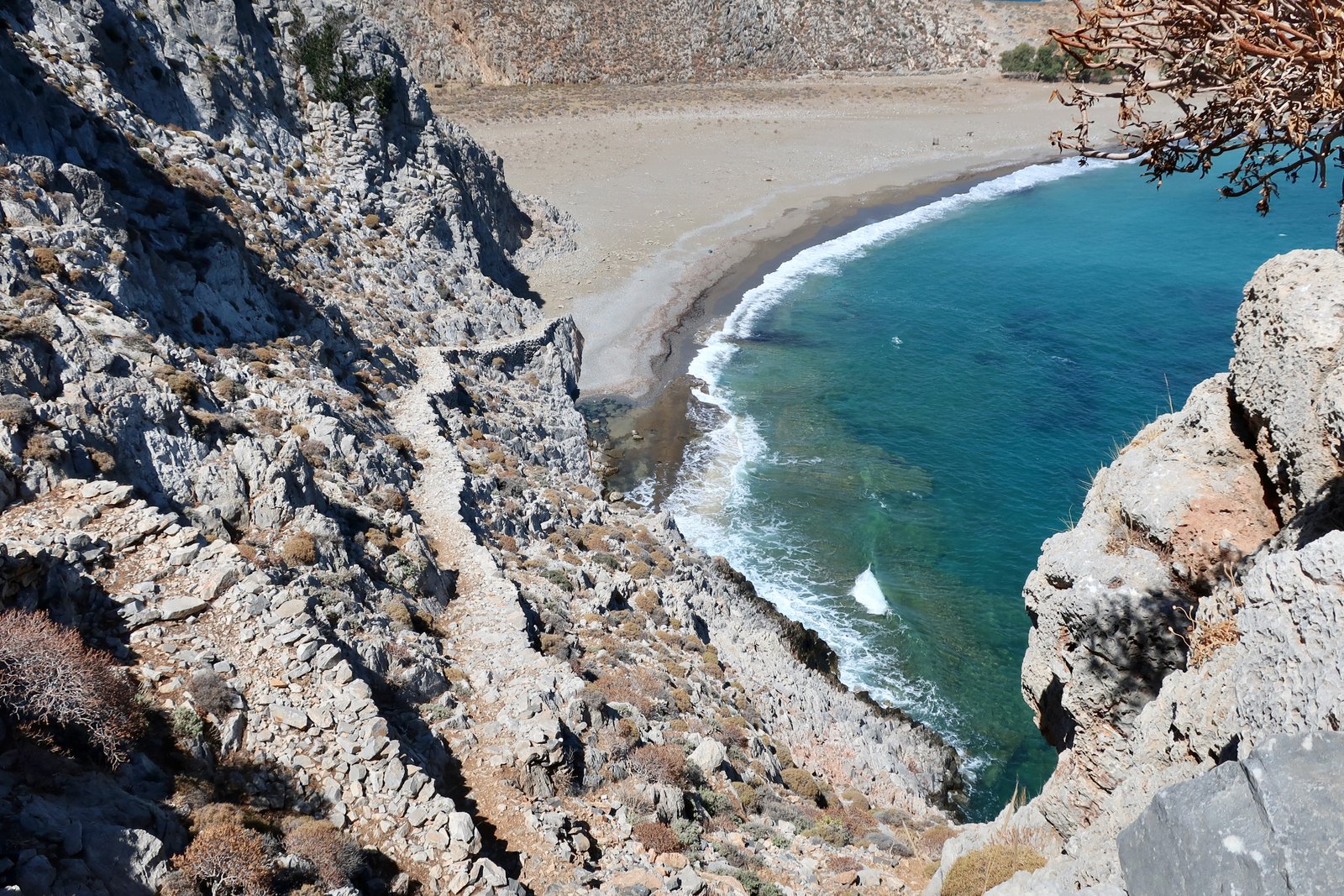
Astypalaia
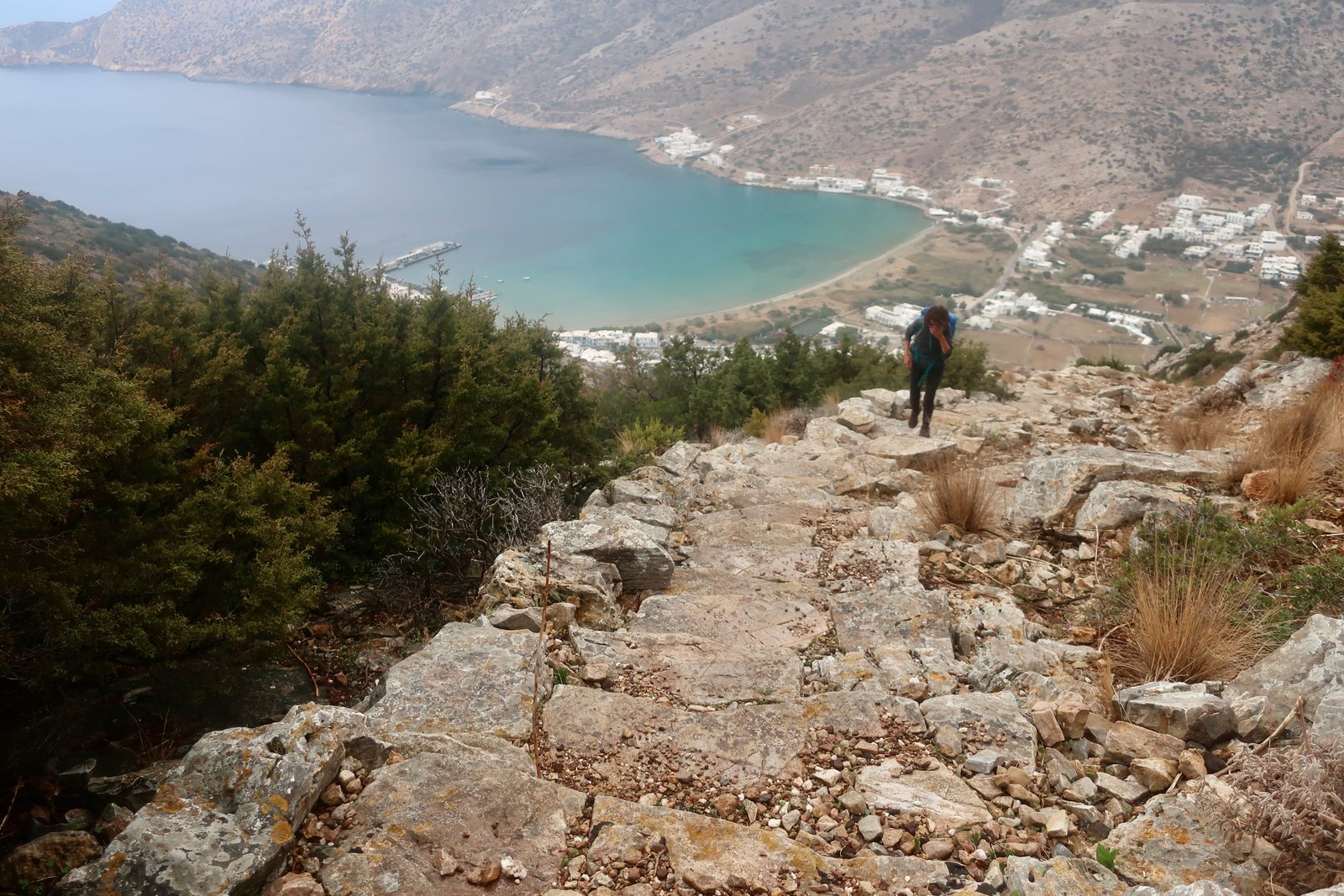
Sifnos
In addition to stone-paved paths, there were also lesser paths, used by a smaller number of people, not so much constructed as worn into existence. The islands are full of them. The strongest are still easy to follow. On others you set off quite confidently, only to have them disappear along the way. They fade to nothing or become confused with the myriad goat paths, siren trails that wind and twist through the hills and lure the unsuspecting walker astray.
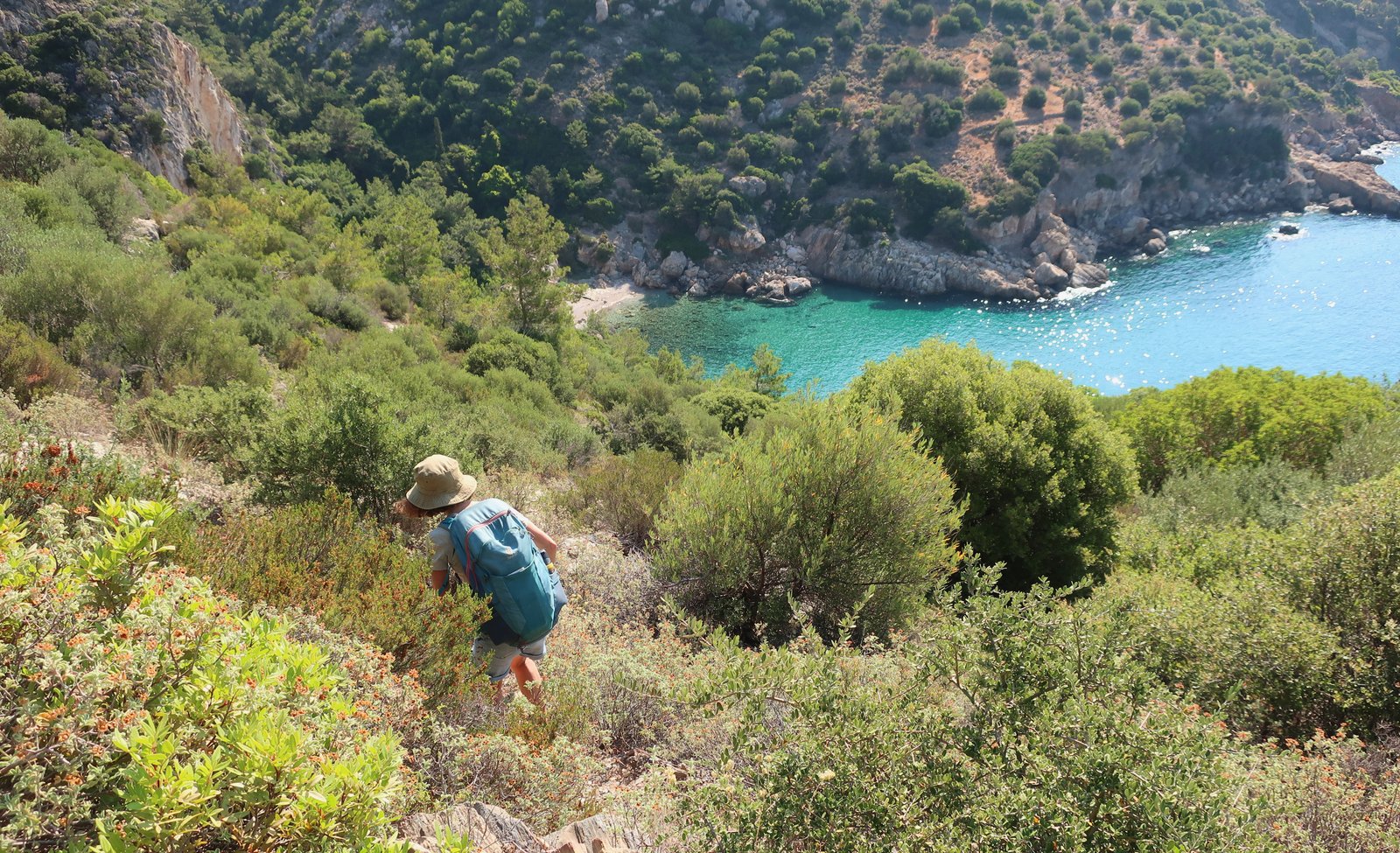
Samos
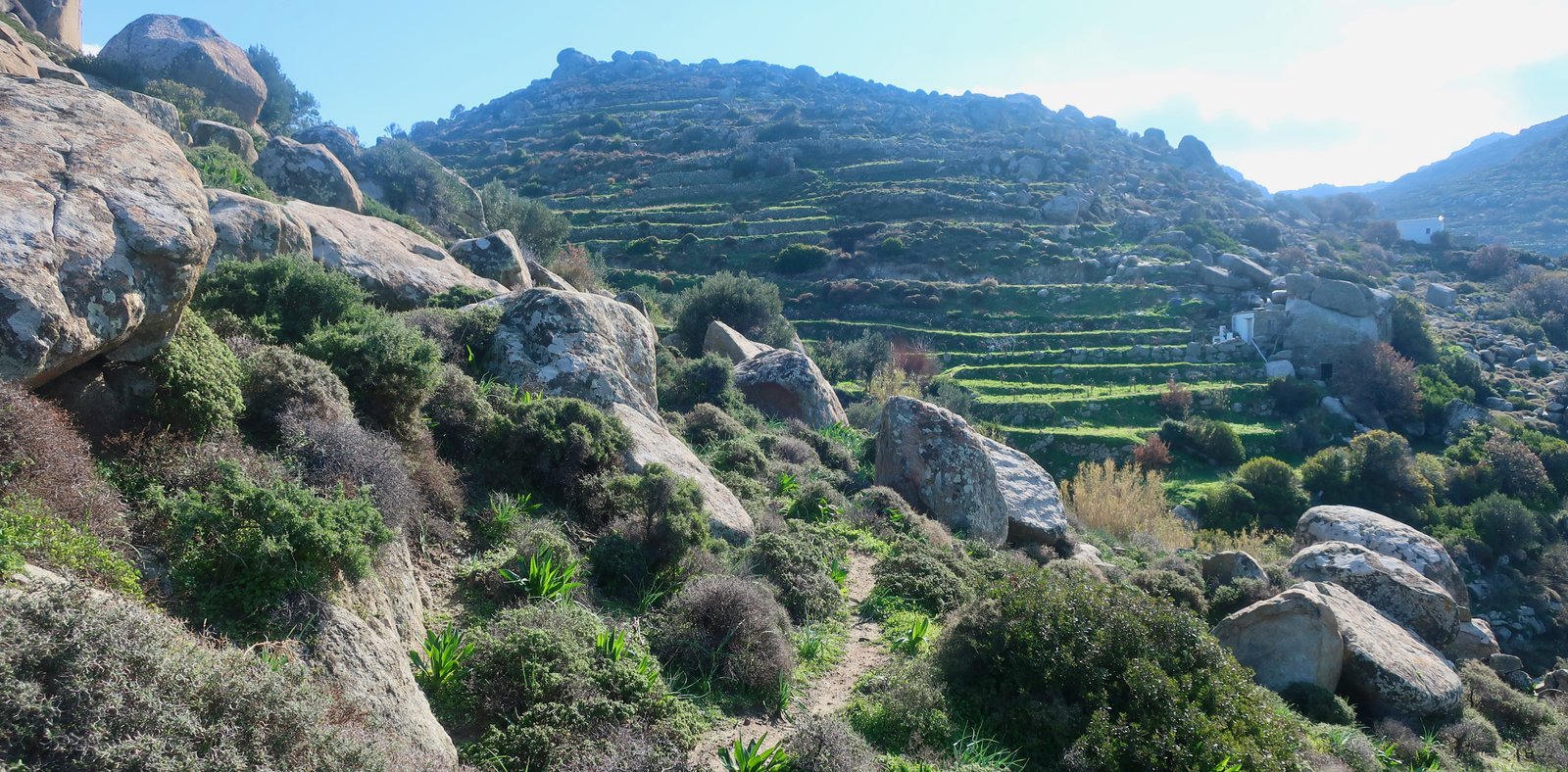
Tinos
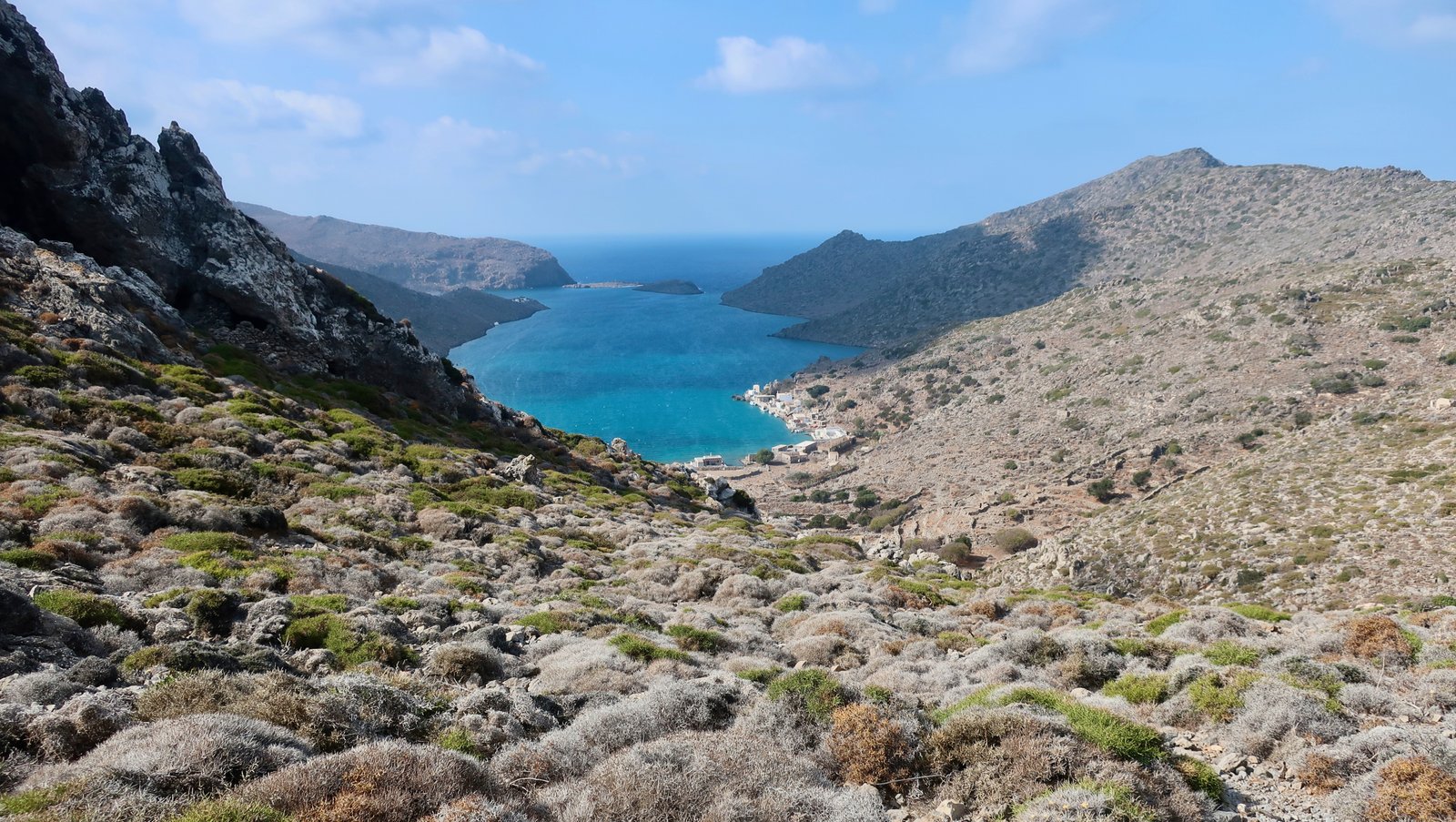
Karpathos
Since the wholesale abandonment of agriculture in favour of tourism and the change in lifestyle this has precipitated, many paths have gone. They have ceased, or are ceasing to exist in both a real and a mnemonic sense – several times when trying to find the way, that the map (excellent Terrain or Anavasi paper editions) says will take us over what appear to be impassable slopes and crags, we have been set right by an elderly villager who has been able to direct us, with a mixture of elegy and pride, That’s the way we used to go.
On some islands the old paths have been ripped up or covered over, replaced by tarmac or concrete. But paths are resilient. Above all stone is resilient. When not deliberately destroyed, when the land over which they pass has no recently-discovered practical value, they persist. And more and more often now efforts are being made to preserve and maintain.
But it’s not just the paths themselves in abstraction. When you take a path, you are borrowing, re-imagining, the original purpose. Paths go to small churches that are islands in a wilderness of rock or forest or otherwise impossible terrain. They go to once-flourishing monasteries, now inhabited, if at all, by a small handful of aging nuns or monks. Paths go through what was once farmland, most often terraces sliced into the hillsides. Paths lead to ghost villages, abandoned in the modern era with the draining of populations away from the hills down to the coasts, from agriculture to tourism, abandoned previously because of earthquake, disease, and above all war. The Mediterranean is a picturebook sea, sprinkled with picturebook islands that have been unceasingly coveted, raided, invaded, decimated.
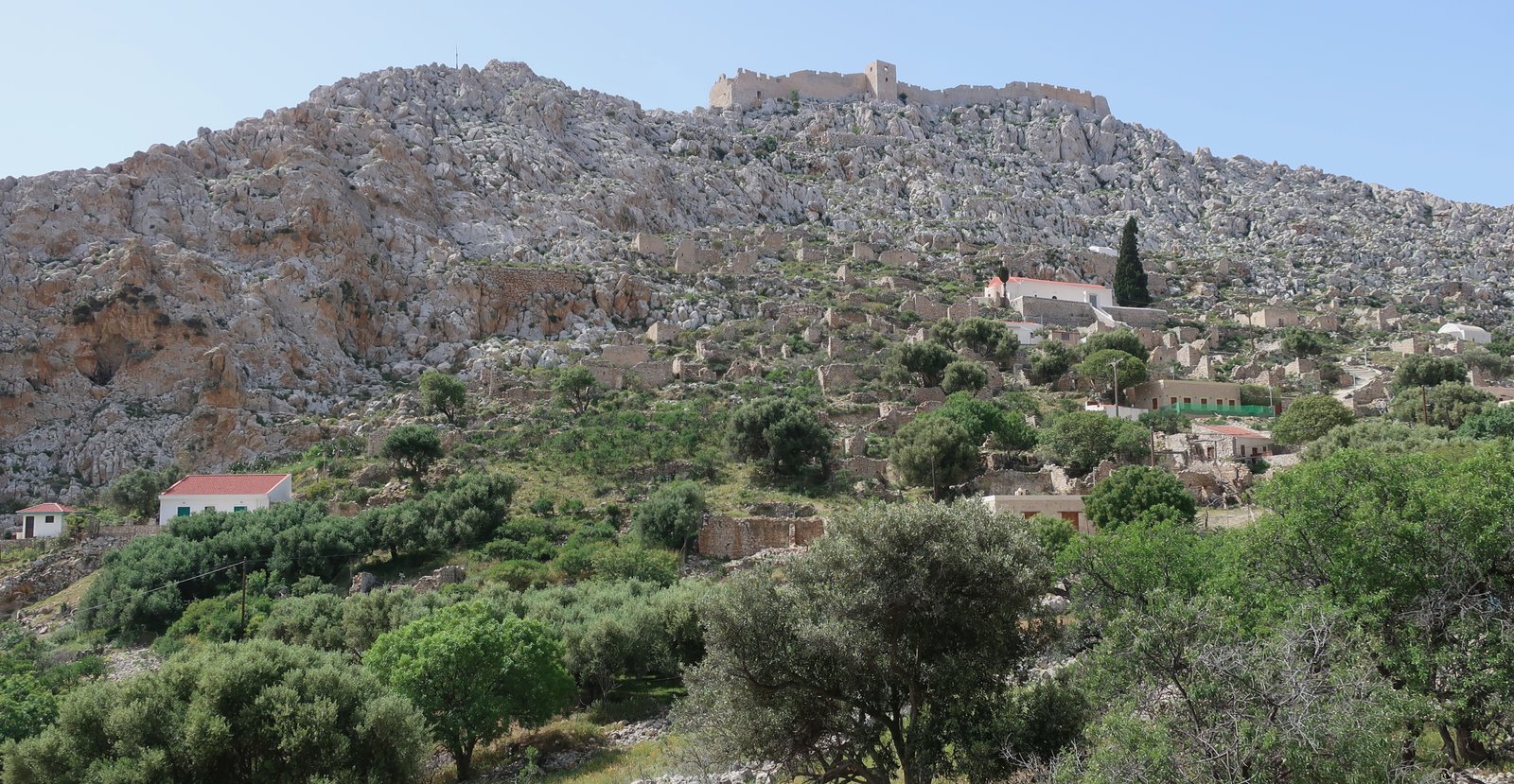
Chalki
Today when people think of the islands they think of beaches and tavernas, two weeks in July or August, the good life. In the past they were places on which to scrape a living in largely inhospitable terrain, but also places to hide. They provide almost-impregnable mountaintops, rocky outcrops, on which to build. Places of sanctuary, refuge from instability and violence.
People have lived in the islands for thousands of years. On the islands you move through history: Protocycladic, Cycladic, Mycenaean, Geometric, Pre-classical, Classical, and still then the last two thousand years of squabbling and fighting – Byzantine and Venetian, Norman and Ottoman, and all the endless pirate forays, the waves of raiders from the Barbary Coast and elsewhere. Then the War of Independence of the 19th century and the opening up to the world. Even recently, in the 20th century the Italians came to the Dodecanese and left a raft of unlikely imperial buildings on Leros, of all places, and rough concrete lookout stations on hilltops all through the southeast Aegean.
Stone persists. Terraces persist, vestiges of walls and cities persist. Where there was once a great, classical city on tiny Nisyros in the Dodecanese – although no-one knows why such a monumental fortress was necessary – there are still black basalt-stone walls five metres high, each individual stone weighing tons. On so many islands some residue remains – walls, gates, foundations, the shape of a classical town, a bronze age settlement, a castle, its stamp.
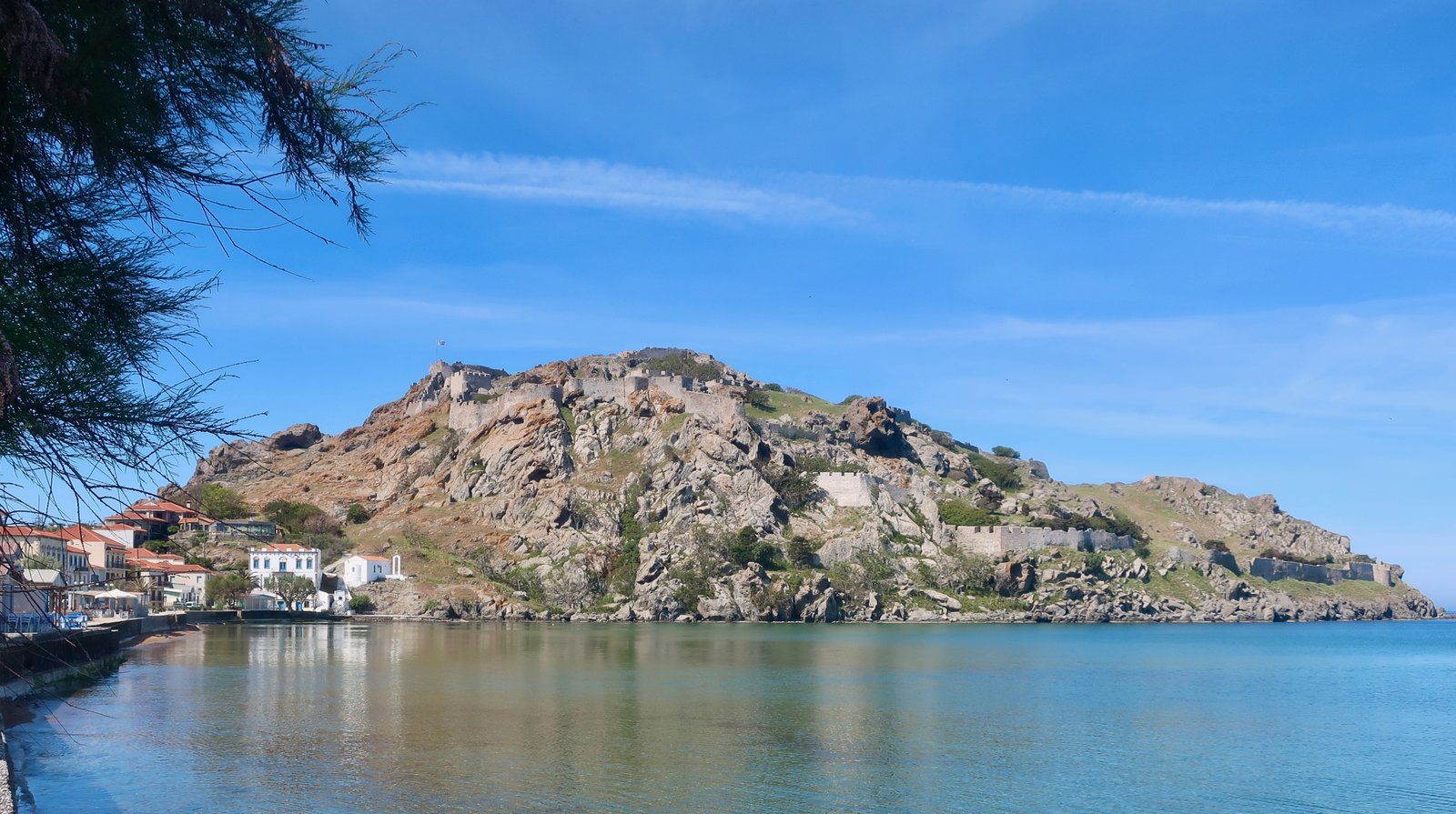
Limnos
Wherever you are, on a three-metre wide paved stone path through olive groves, a narrow dirt trail through the hills, in the forests of the north or the Ionians, among bare, gasping contours further south in a wilderness of rock or spike-plant, in a mountain-top world of peaks and cloud, exploring a classical settlement, sitting in a hilltop village or fishing port eating fava beans and drinking cold white wine, you are in one of the most beautiful, resonant places, in the world, on an island surrounded by the blue waters of the Aegean or Ionian Sea. It’s startling and heartbreaking and takes your breath away.
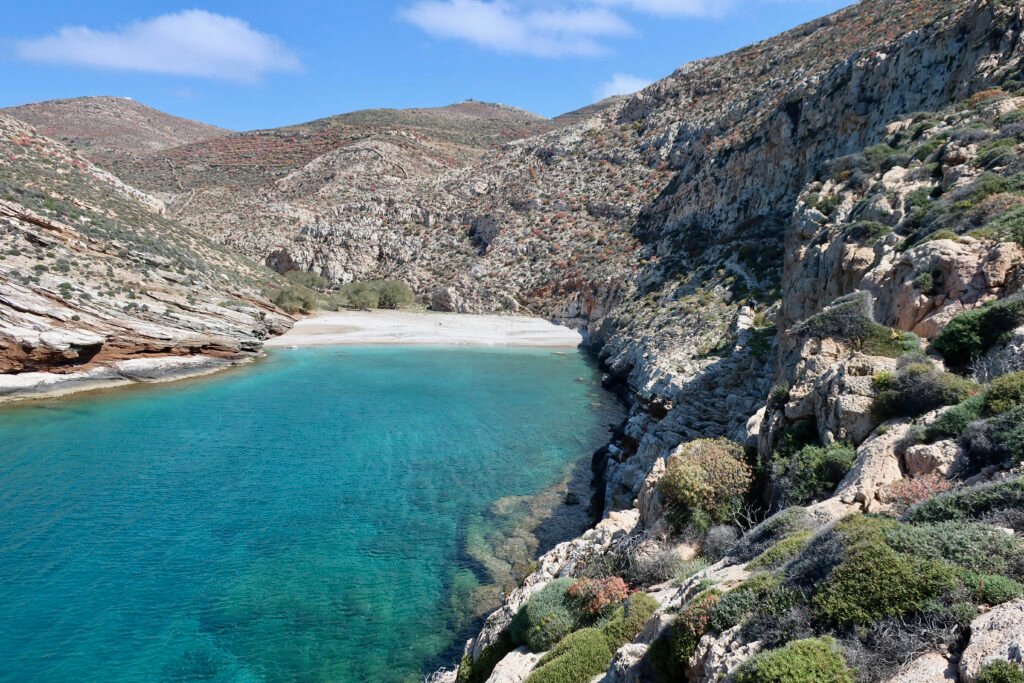
Folegandros
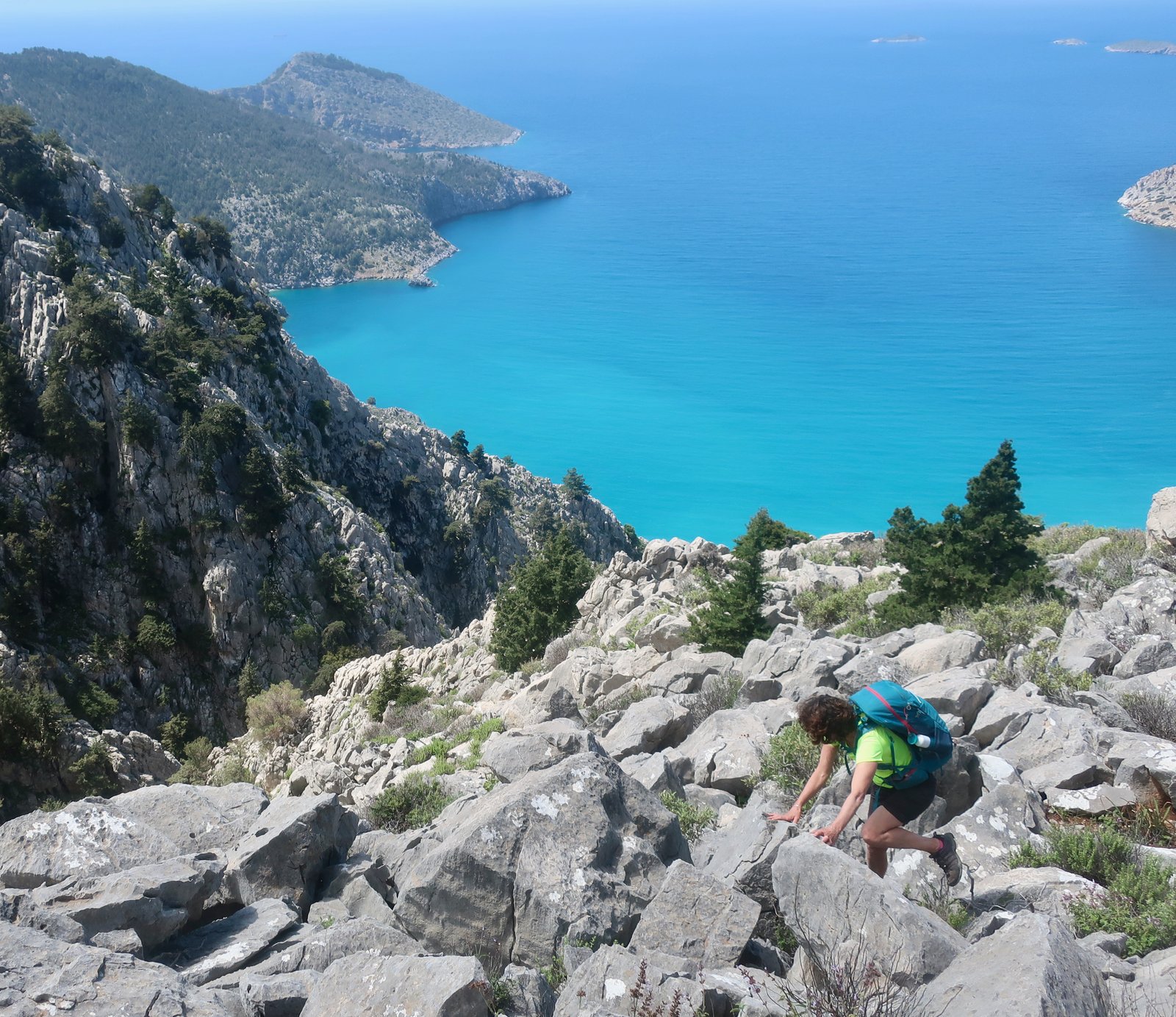
Symi
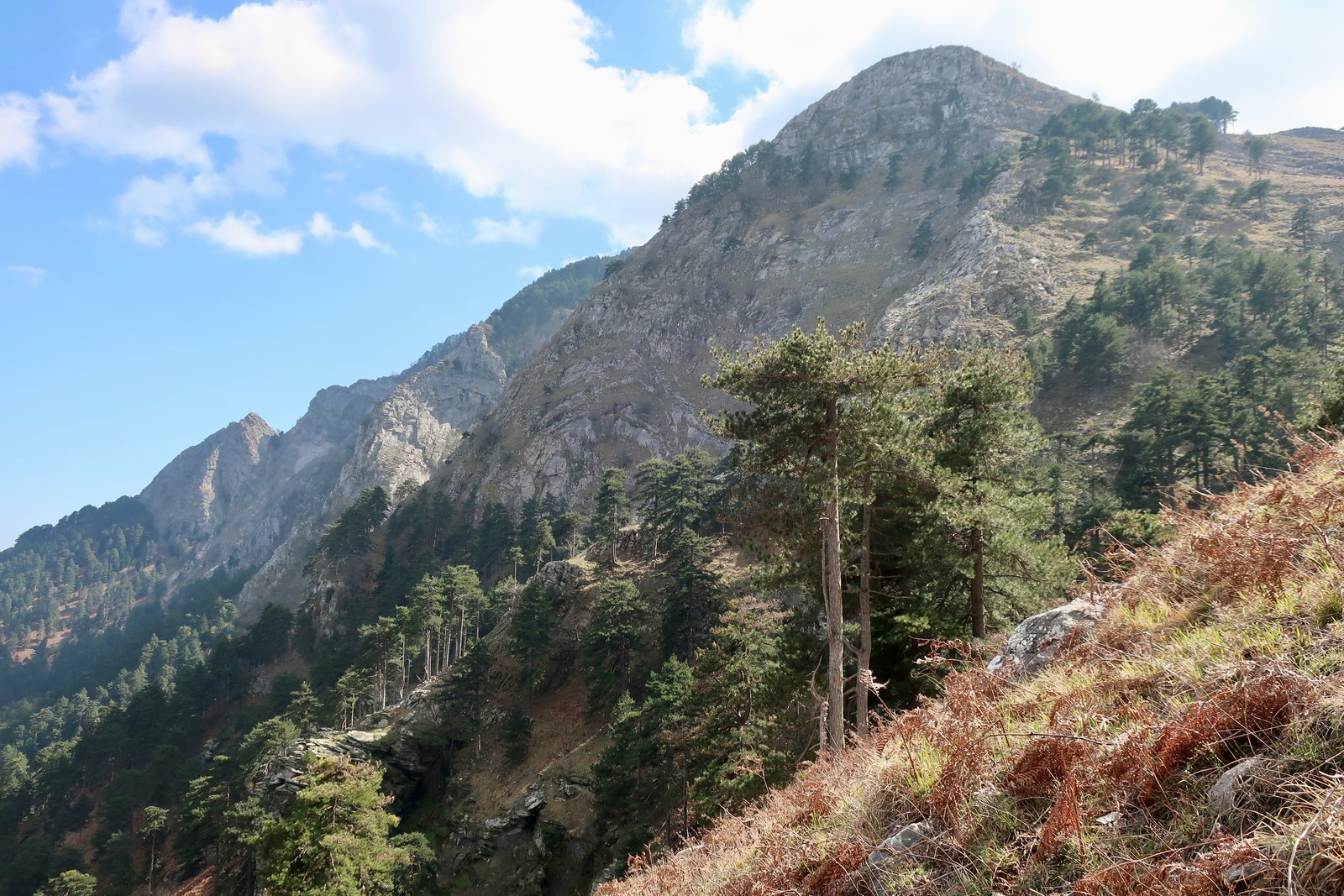
Thasos
And for those who are picturing the millions of visitors who pass through the islands every year and would prefer a quieter place to walk… If you go hiking in the Greek islands you will have them to yourselves. You almost certainly won’t be there during the two summer months when everyone goes to the beach, because it’s too hot for hiking – even if, getting up at dawn in summer, hiking until the midday heat kicks in, then heading to the water, is another sort of treat.
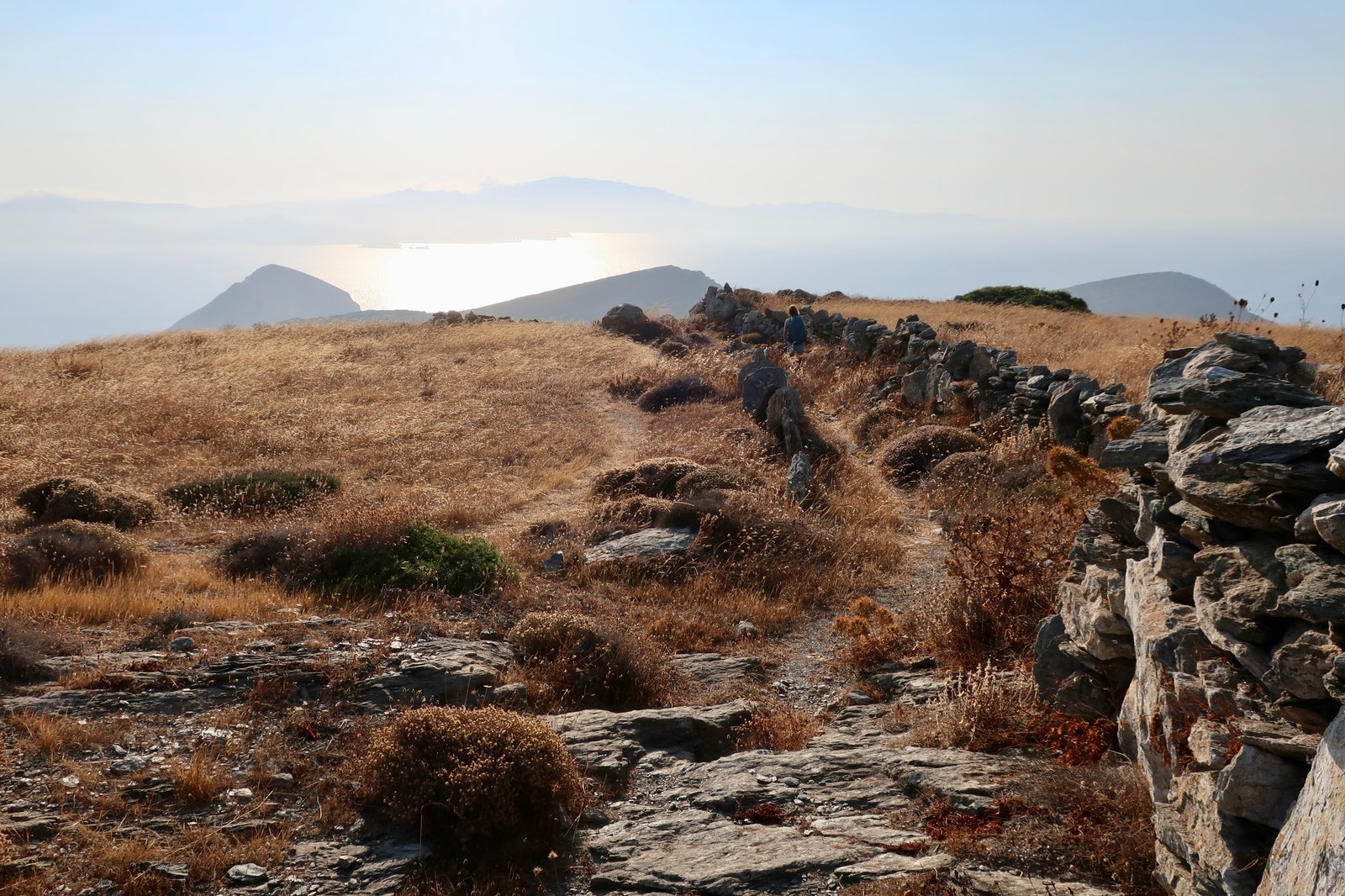
Sikinos
For the rest of the year, on almost all the islands, there’s hardly anyone. Sometimes it’s all you can do to find somewhere to stay. And even when there are other people in the settlement/town/village/port in which you are staying, as soon as you start to walk, everything is left behind. The crowded beaches, the tavernas, the seafront promenades. You’re in the hills, on a gusty ridge, in a gorge, zigzagging down a steep and terraced slope to your own private beach and you have it all, all these layers of beauty, to yourself.
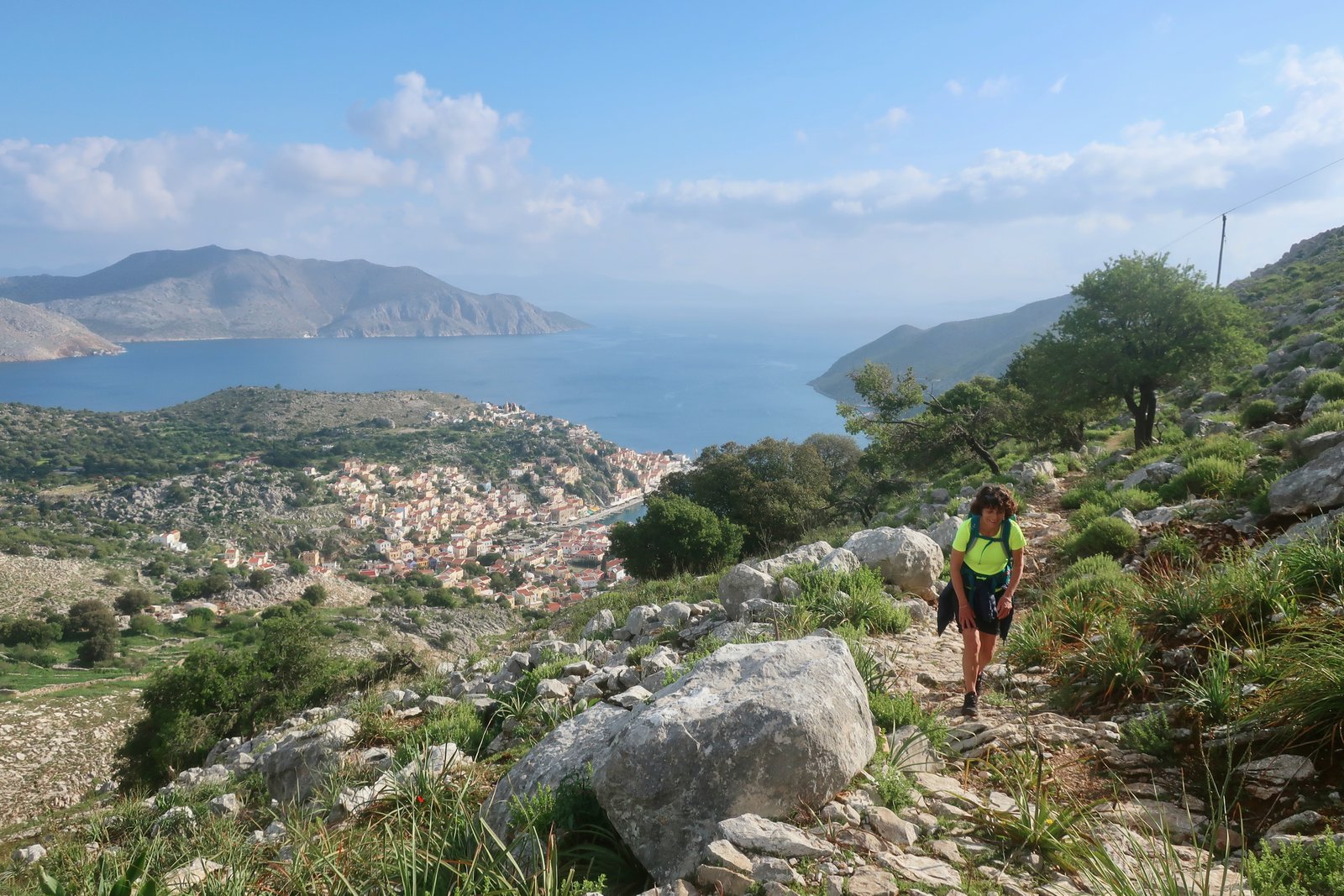
Symi