Take the familiar criteria:
size and shape
vegetation
population numbers
settlements
hiking trails
ports
beaches
water
tourist development
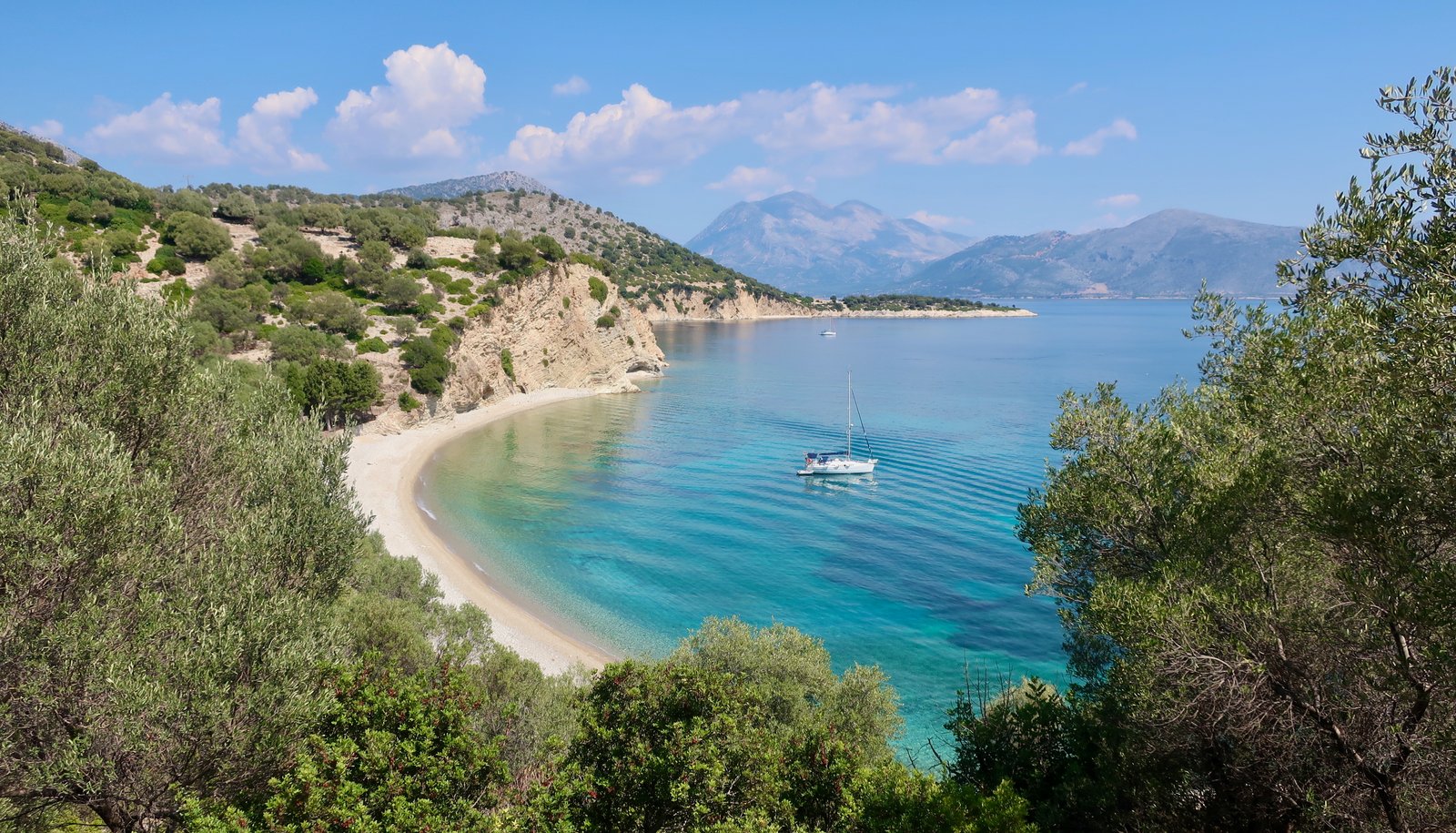
For Kastos, turn the dial down for size and population, turn it up for number of beaches, turquoise-clarity-of-water, and for something like prettiness. Everywhere in the world these days prettiness is having a moment. We often wonder if in the past, in places like this, it meant anything at all.
The internet says somewhere between fifty and one hundred and twenty permanent residents. On the boat over we talked to the visiting doctor, he said no more than twenty-five in winter. The hold-outs, those with nowhere else to go.
More than anything else Kastos is a yachting destination. A small boat does come most days from Mytikas on the mainland – it’s not a ferry, it’s a boat – and in summer another, with tourists from Lefkada, perhaps a couple of times a week, on which people sit neatly, in rows, their bare knees touching. There are no car ferries. But most people come by yacht.
Kastos is very, very lovely but has almost fully made the transition from place on which people live, and work, and have families, and die, to place that more or less only exists for the holiday season. Even so, it’s nothing at all like Pserimos, which represents the absolute extreme of this process of metamorphosis. Kastos has the comparative good fortune not to have Kos one side and Kalymnos the other. Also not to be concentrated into one extraordinary bay and beach.
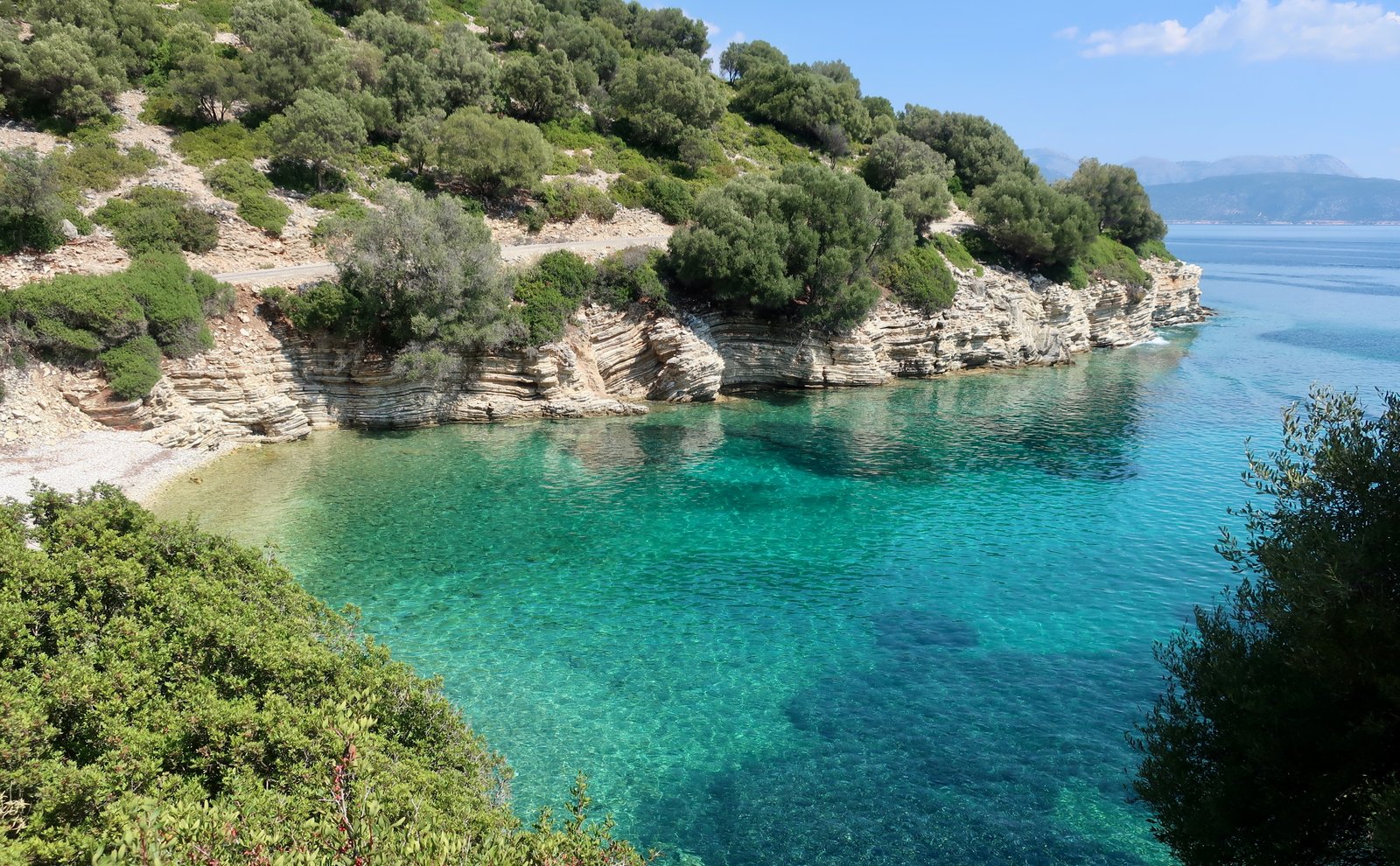
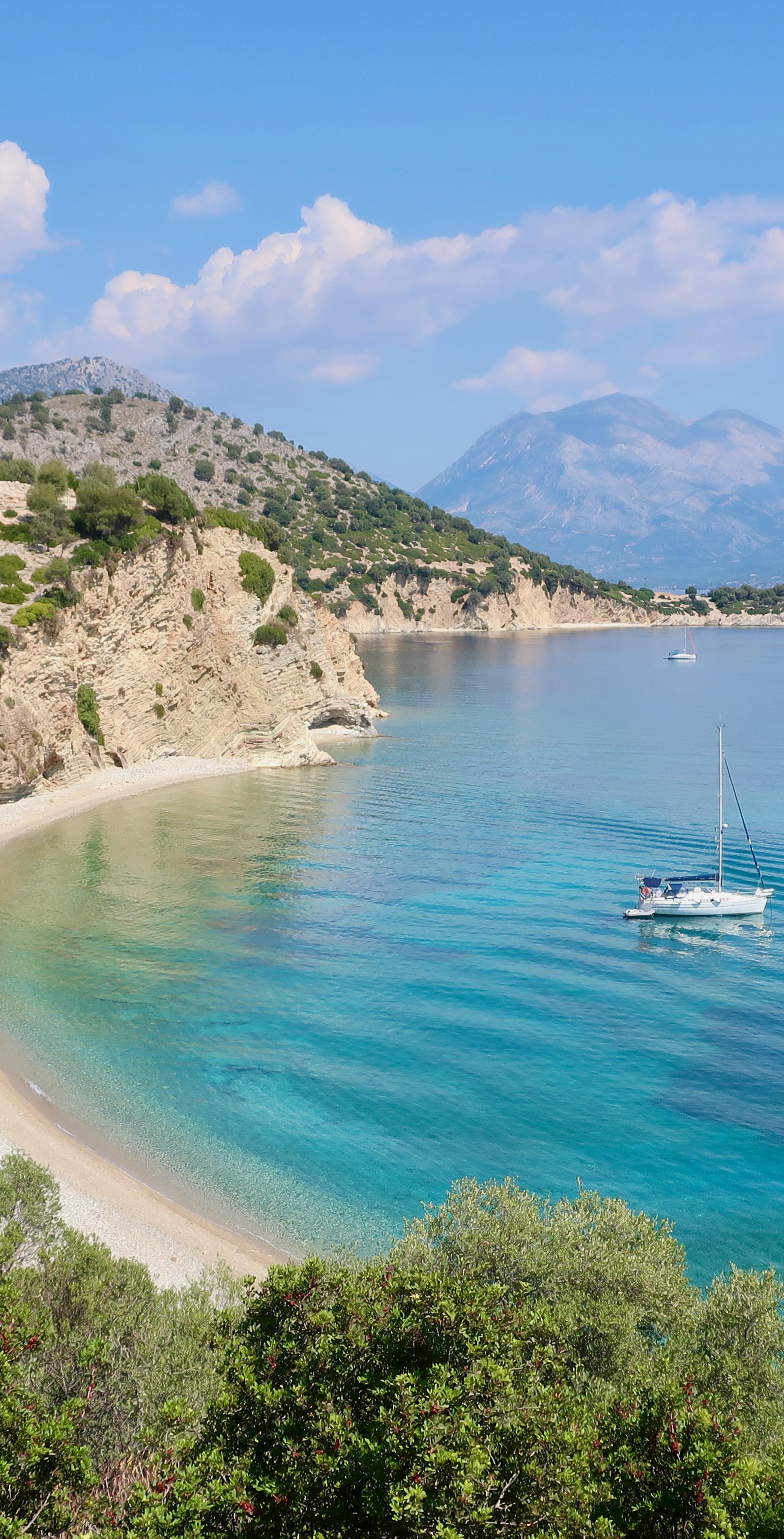
About eight kilometres long, hardly more than a kilometre across, the highest point is a little under one hundred and fifty metres. The southeast coast is a succession of stunning coves and beaches, even for a Greek island improbably so. The two settlements, the port and the village, run into each other. In the port in season there are several tavernas and cafés/bars. Before we went, the person we were renting from told us there was a minimarket. When we got there, it was having a year off. We had a brief, melodramatic moment, but then just took the boat back to Mytikas a couple of times to go shopping. We went in the early morning, swam from the beach there, read for a while, wandered around the small town – it’s an end-of-the-road seaside place, no passing trade – bought as many supplies as was practical and made sure we didn’t miss the boat home in the afternoon. Back to Kastos bearing goods as if stocking up for a seige. A perfect holiday sort of day, not a problem but an unexpected addition.

There’s space for a small number of yachts in the port. The rest moor up in neighbouring bays. Walking along the east coast, from bay to bay to bay, is like passing through a succession of roomy yacht-parking-places. One yacht here, one there. Two if the bay is wide enough. There’s very little accommodation on Kastos for yachtless travellers.
In the evening a line of dinghies tie up along the front. The restaurants do good business. People sit on stools in the bars. Two Brits chat at a Greek bar-person, lamenting some royal wedding or other:
How much d’you think the cake cost?
What about her dress?
And who paid for it?
The Greek guy, having understood perfectly well where this is going, answers: You?
Yes, that’s right, the taxpayer…
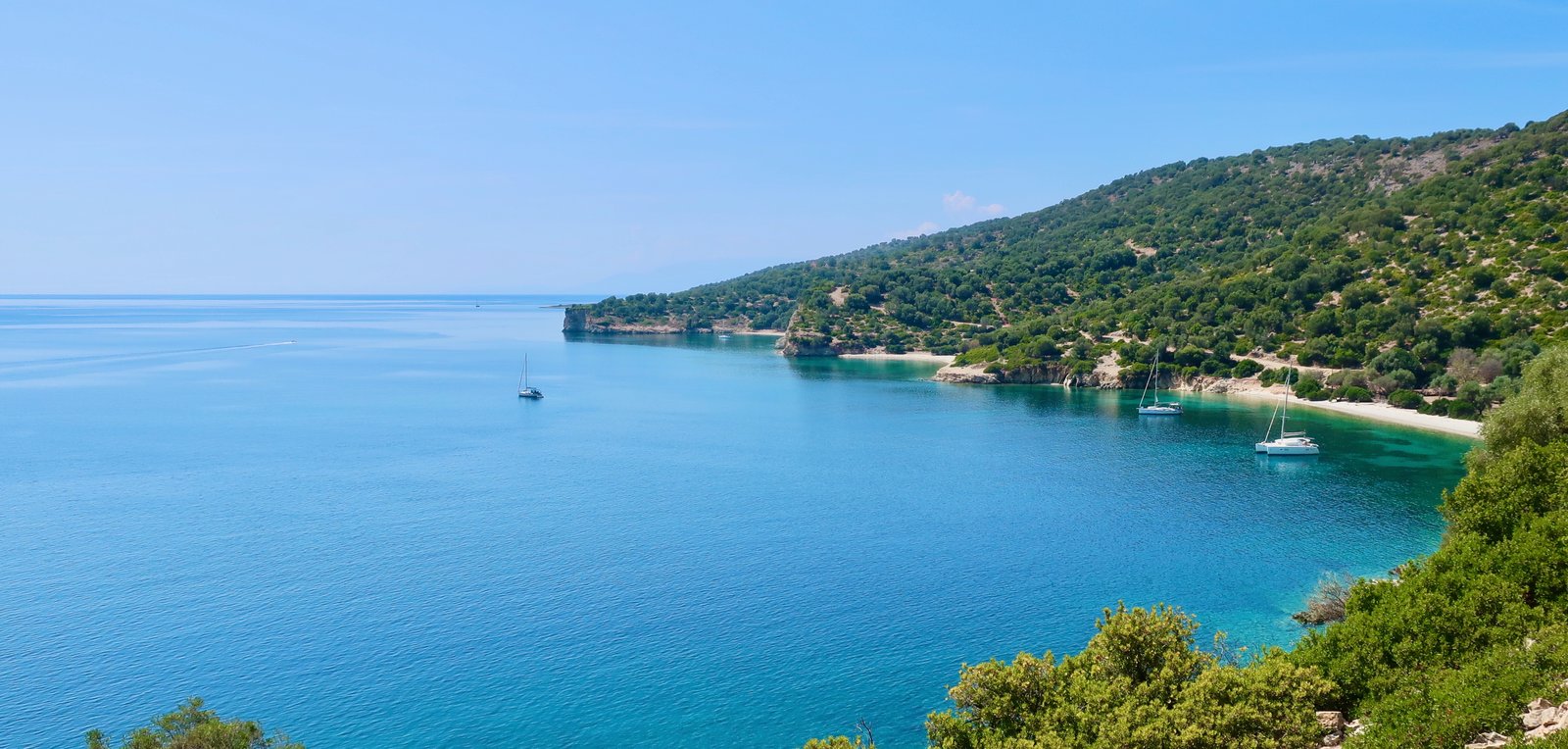
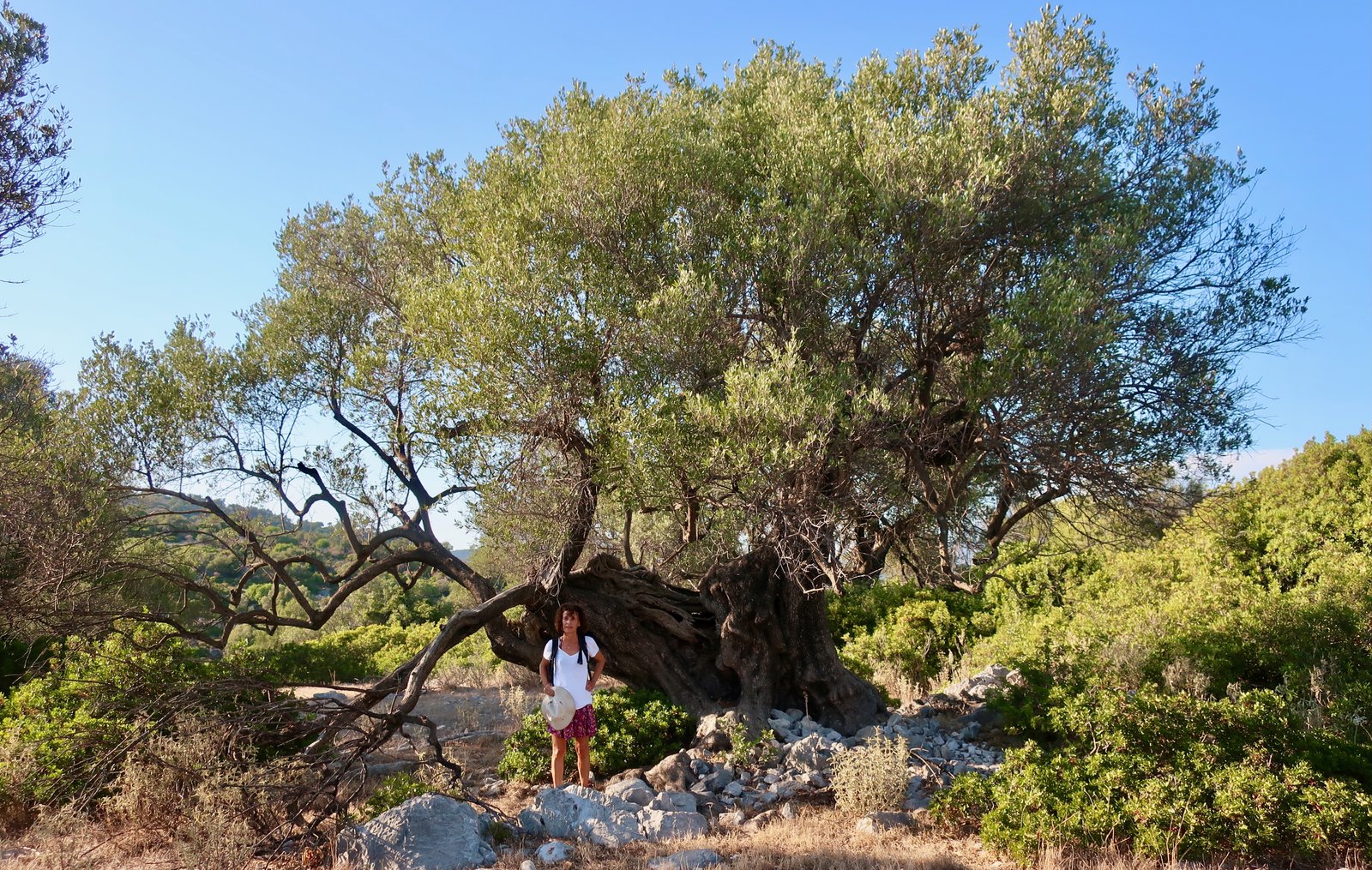
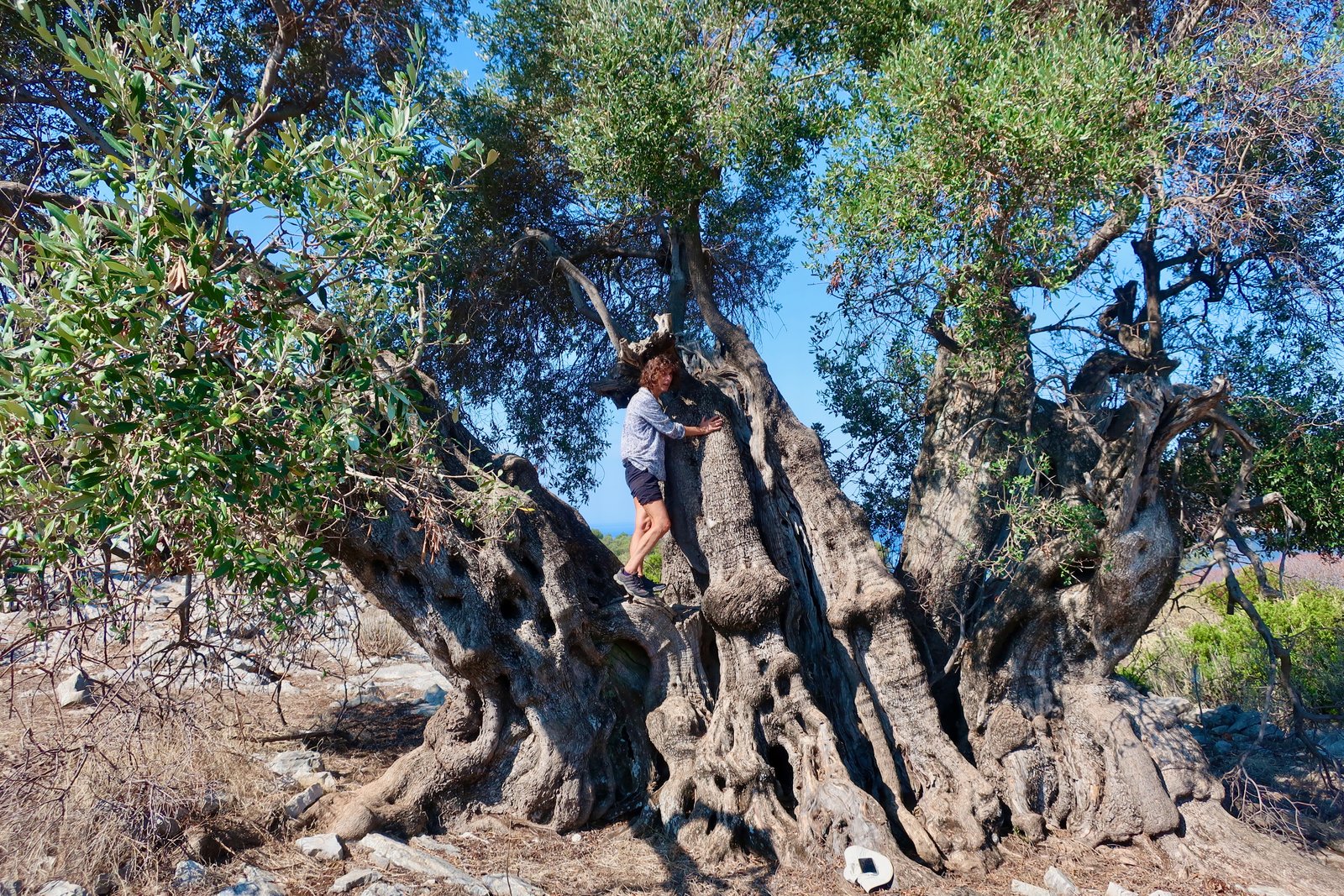
Several years now since our visit one early September, Kastos has been largely distilled down to the bays and beaches, to the olive trees – the biggest we’ve seen anywhere in Greece, on this tiny island, they are incomprehensibly old –
and to swimming in the early morning:
On one side of the main bay there’s a set of concrete steps that lead down to the water. Leaving our stuff at the top of the steps on an old bench, we go down and launch ourselves. We swim past a few yachts, moored or tied up, past the sea wall out of the port. The water drops to a depth of four or five metres, but is as clear as glass. There’s a low cliff on the left, striped with bold geological rock-layers. A dozen or more yachts are moored in the first bay. We go straight across through them, seeing the yacht-people waking, eating breakfast, watching us, wondering where we’re going, which boat we’re from. On the furthest one a middle-aged couple, sitting stitchless, drinking coffee or tea, wave casually as we pass. At the end of the bay is a tiny island, almost connected to the shore. There’s a narrow channel through which it’s possible to scrape-swim very carefully. We swim once slowly around the island, through the channel, checking out the fish in among the rocks. Maybe Yvonne sees an octopus. She swims with a snorkel so sees better than me. Maybe she pulls off her mask and yells xtapodi! xtapodi! and hangs over it pointing down so as not to lose it. We swim back through the middle of the bay, through the yachts, and as we approach the end, we race, a futile effort on my part since Yvonne has mini flippers and can turn on her motor and fizz past like a torpedo.
After getting out by the steps we dry off, lightly, and sit ourselves down on the bench there. Not the crooked one, you couldn’t sit on that, it would fall over. The other one that looks straight out into the port. We sit there for fifteen or twenty minutes, heating up, the last drips sliding off, chatting, which boats are going now? what shall we do today? until the pull of coffee and breakfast gets too strong and we wander home.

HIKING
It isn’t really hiking. Strolling is more exact. Occasionally it’s minor exploring. Still, you can walk fifteen kilometres. Maybe twenty. Anyone who likes hiking will like exploring too, on small Greek islands with giant olive trees and the most quintessentially gentle Greek island terrain.
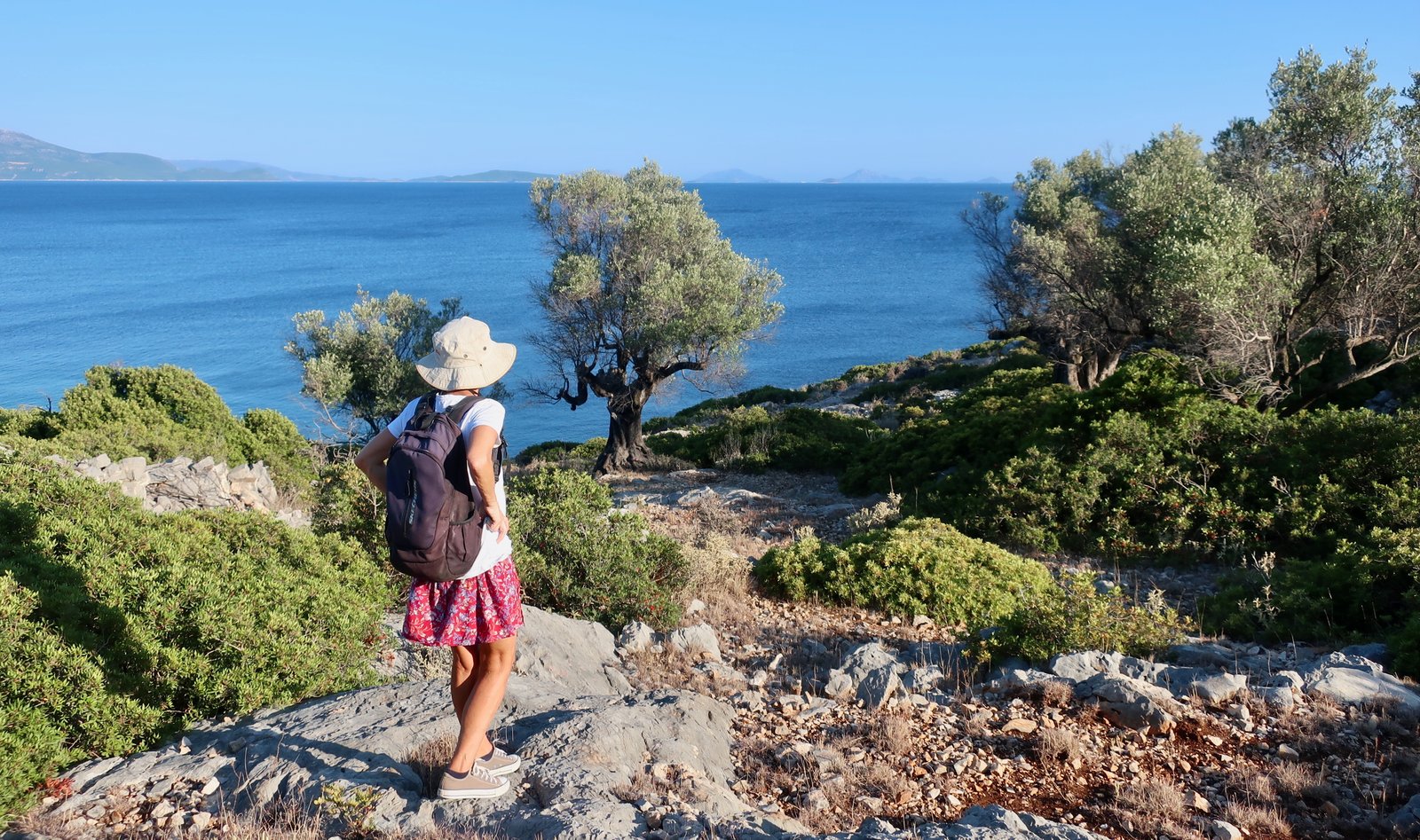
A road hugs the east coast from Kastos village to the northern tip. It goes past bays and beaches galore, all of them fantastically turquoise blue and clear. They’re like irresistible sweets, passing them we have the desire to scoff them, to throw ourselves in, as if each one will in some way be unmissably different.
At the end of the island you can double back cross country until you find the end of the track that runs all the way to Sarakiniko Bay on the opposite coast. It runs on the top of a slope that drops steeply down to the water. On the left are incredibly old olive groves. Across the water is the island of Kalamos, with usually a bunch of fair weather yachts taking advantage of the near-calm between the islands to glide slowly along, fragile and trembling as butterflies.

Sarakiniko Bay is the island’s second port. There’s nothing but a jetty, a fishing boat or two, perhaps an overnight yacht if the wind isn’t coming from the wrong direction. Looking almost due west just before entering the bay, there’s Meganissi Island past the end of Kalamos, and behind it Lefkada.
Sarakiniko is another place to swim. Out past the island in the centre of the bay in water so still whenever we were there it was like a pond, an actual pond, a pool-pond with silence and trees overhanging. Like a place in which noblewomen might drown themselves in dark stories. There was even an echo. It isn’t like the sea at all.
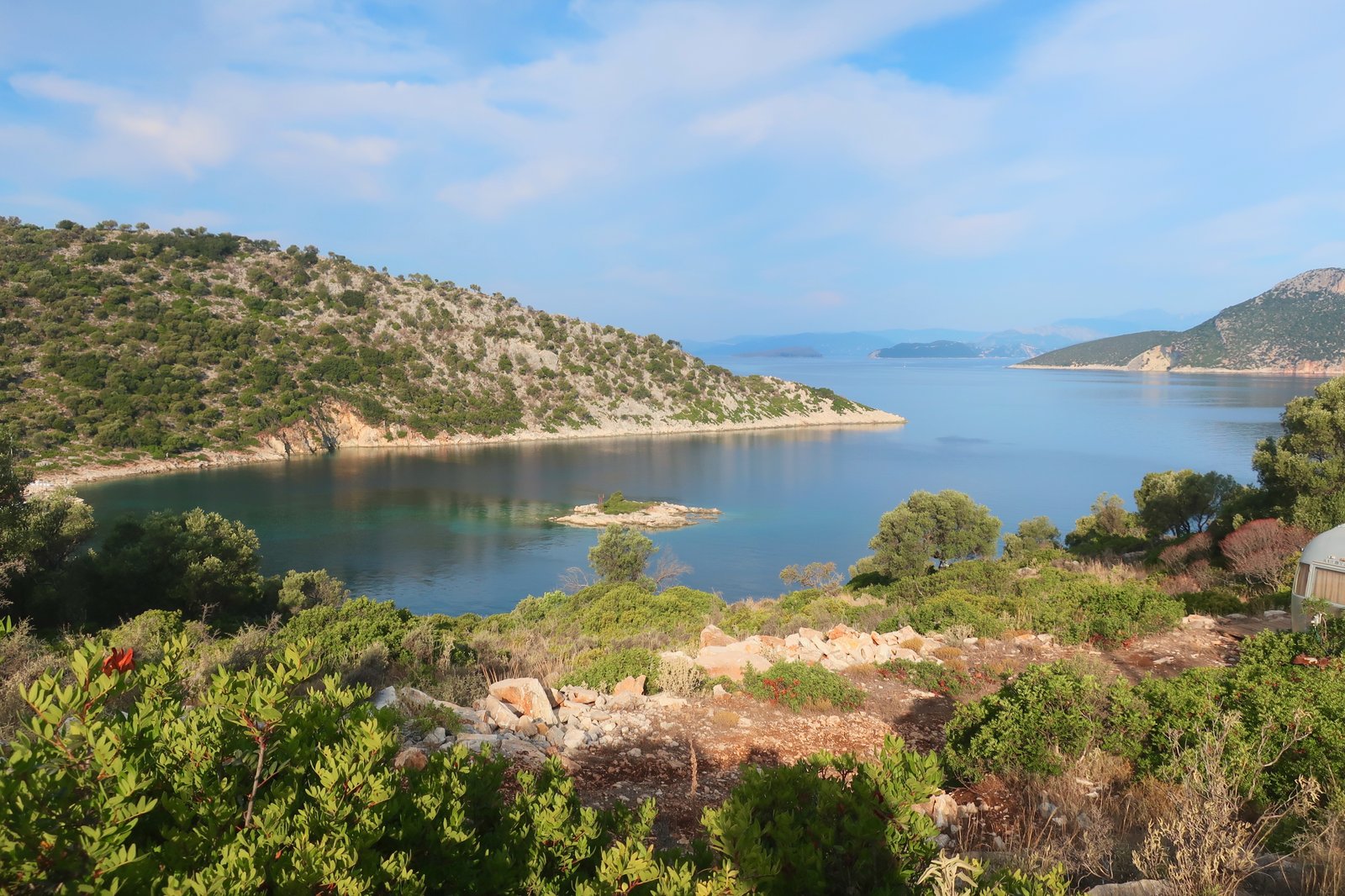
Walking south from Kastos village there’s another road, that turns quite soon into a dirt track, and eventually disappears. It ends around Athiki Bay, with still a little over two kilometres to the end of the island. The terrain is quite open and passable, and there are always more ancient olive trees. No one seems to harvest the olives any more. The trees keep growing, they keep giving, they spread just as they want. Regularly we look up information on the ages of olive trees, how to work it out, but always end up with just the visual evidence of extreme age, the individuality of each tree, and historical conjecture: what might have been happening in the world when this tree was planted? The tallying of centuries brings it home. They are awe-inspiring.