
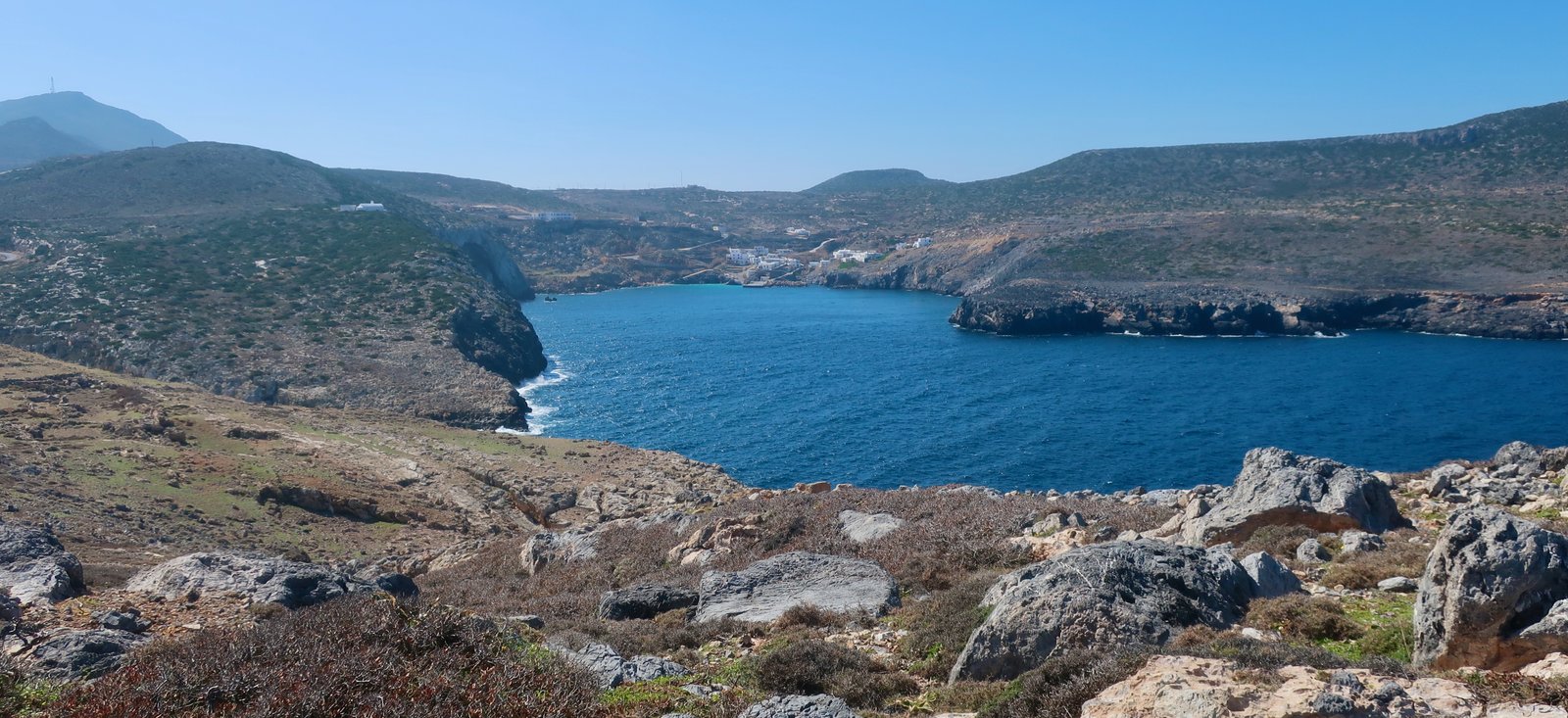
Antikythera is one of the anti-islands. There are at least half a dozen of them, christened as counterpoints to larger neighbours. Antiparos is the most notable – like the others, it owes its name to its proximity and relative smallness compared to its companion, but unlike the rest, with a permanent population of more than a thousand it’s far too large not to be an island in its own right.
Other antis are: Antipaxos, a stutter on the southern end of Paxos, at last count home to some twenty people; Antipsara, with, according to a 2011 census, a lonely population of four; and then the barren anti-rocks, tiny, splinter-like Antitilos and solid, towering, volcanic Antimilos.
It could be there are more, bits of rock or spiky islets we overlook as we pass them by, too insignificant or locally-named to come to our attention.
Antikythera though is different from all other antis, too far away from and too unlike Kythera to be a shadow. Whoever named it named it wrong.
***
Any more than Force 6 we don’t stop in Antikythera, we were warned by the steward/junior officer. As we set off he went around the small lounge section gleefully distributing sick-bags to the dozen or so passengers.
In good weather two boats a week go from Kissamos, on the northwestern tip of Crete, to Gythio in the Peloponnese, stopping by Antikythera and Kythera on the way. Several days previously it had been blowing Force 11, categorised as Violent Storm on the Beaufort Scale. The wide channel between Crete and the Peloponnese is one of the rough places, the meeting-point between two systems, Aegean on the one side, Ionian on the other. Antikythera is halfway across with nothing else close by, a slender shard of an island, ten kilometres long, little more than three wide.
There’s no bakery and no petrol station. Bread and jerry cans come and go with the boats. Somewhere between twenty and thirty people live on the island. When we were there in early February 2019 the school had just been reopened, for three children, after a hiatus of twenty-five years.
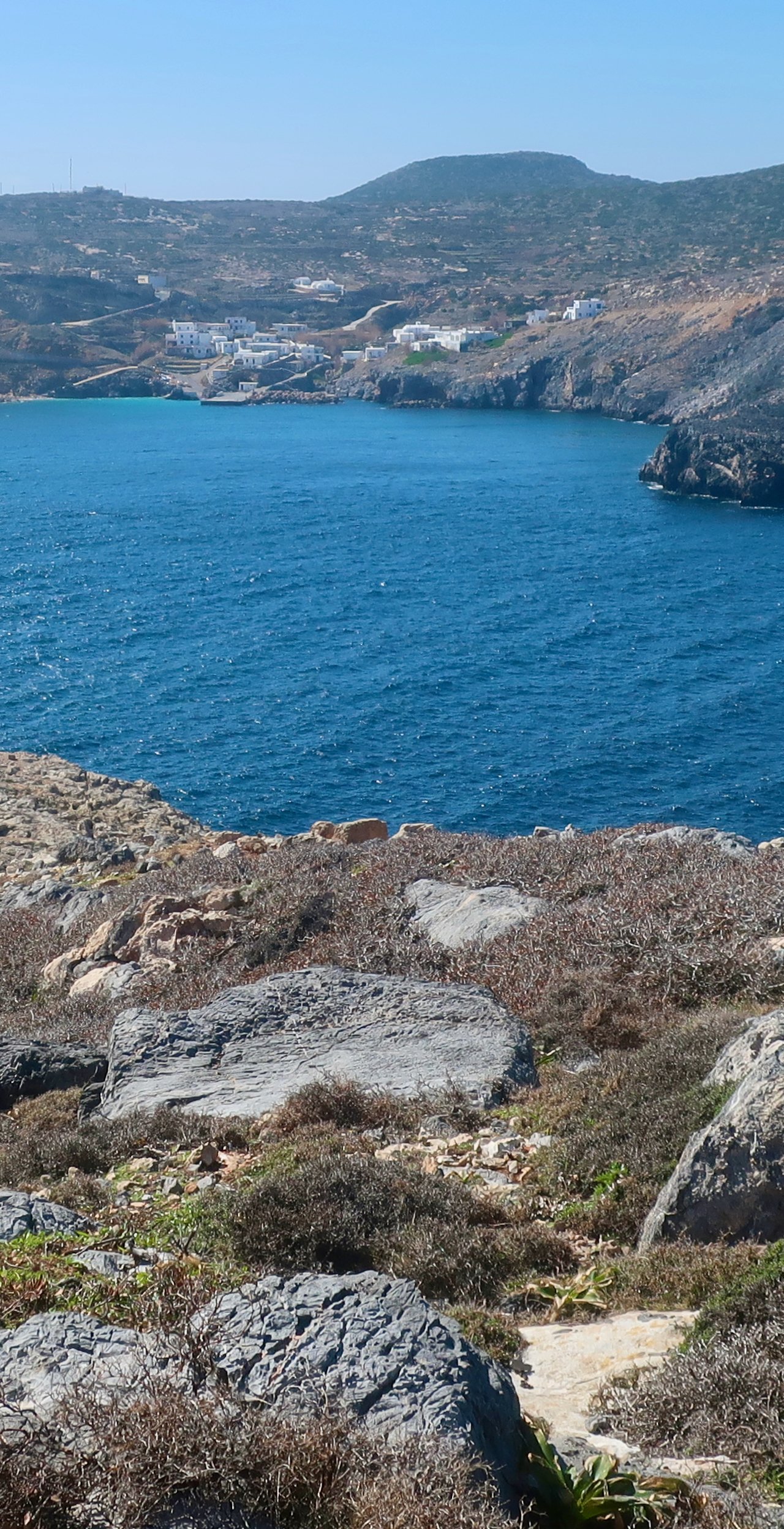
The only village and port of Antikythera sits inside a roughly circular bay, well-protected, but so narrow that even for the small ferry we were on there are only a few metres to spare at each end as it turns. The boat spins on its axis. If there’s weather we can’t do it and we don’t stop, the steward/junior officer said.
The houses, simple, even more than usually devoid of architectural flourish, are a sort of wind-and-weather-white that on a bleak early March day edges towards grey. They occupy one side of the bay as if milling loosely around, having not yet taken the decision to gather into village form.
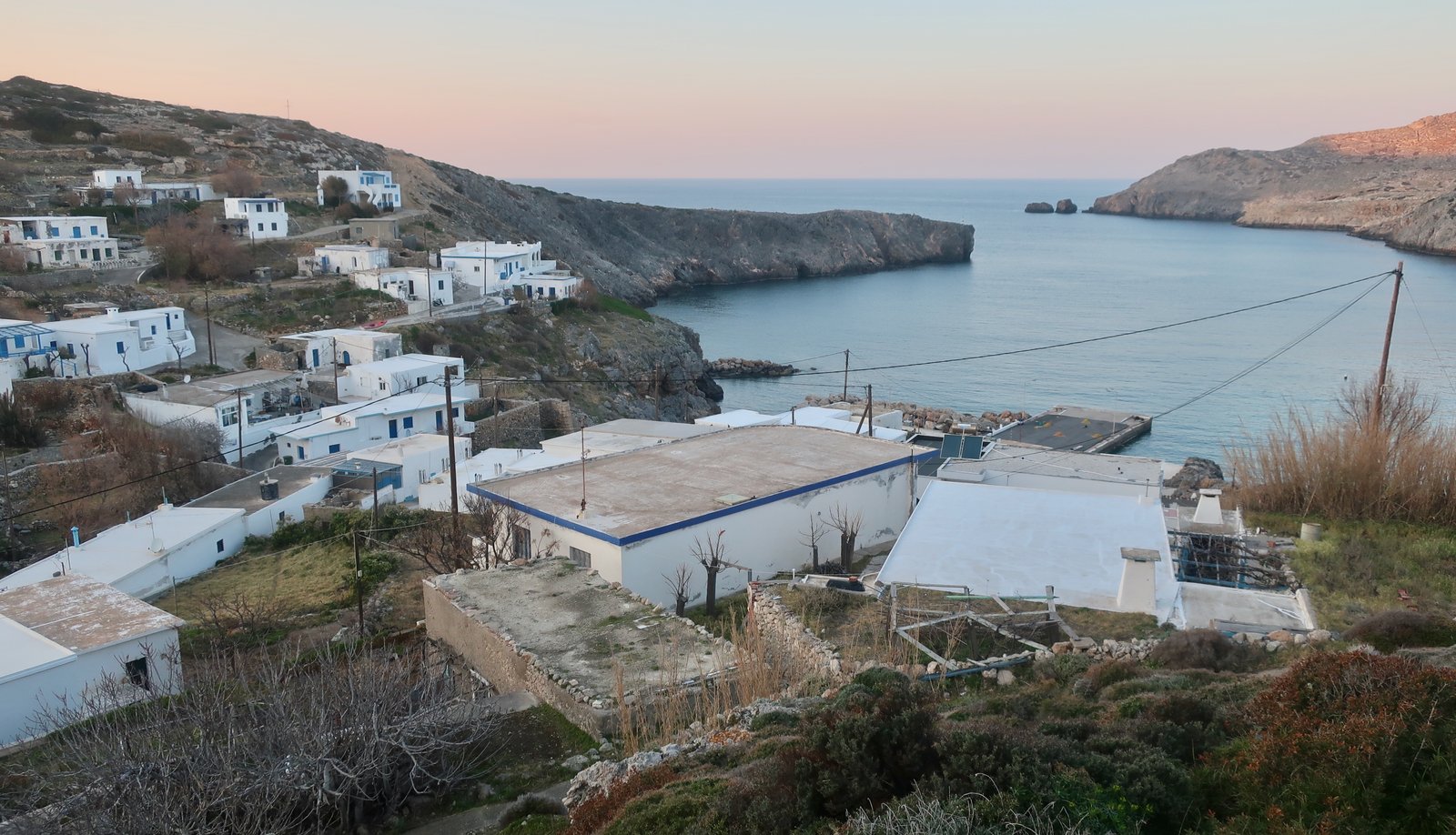
Are you getting off here? From the same crew member. He seemed amused when I told him yes, that we like small islands. There’s nothing here you know, he said, and told us his father was from Zakynthos and his mother Mytilini (Lesbos), wanting us to understand the contrast. Proper islands. I asked if he had been ashore here. He nodded. Five metres, he said. Enough.
Typically, what happens is we get off the ferry and are thrilled with the unlikelihood of being in such a place. We feel something like adventure. On Antikythera, we start to take it in and immediately wonder what it must be like to live here, in the heart of the world, western Europe, with all the advantages this confers, but at the same time so remote, so limited from day to day in a geographical, cultural, social sense. Physical contact with the outside world is thin: a small handful of tourists in the summer, many of whom anyway will be people with roots on the island, who come back annually to romanticise the small island life they or their forebears have escaped from, the tranquility, the simplicity, the absence of drama. Even the itinerant woven-basket and ceramic-pot sellers who travel around the islands selling their wares, with vans stuffed full of produce and crackly loudspeakers to announce their arrival, must give Antikythera a miss. It just wouldn’t be worth it.
The woman in whose small house we were staying – she was just off to Athens, where she spends most of the year – picked us up in her battered car, but before taking us home first took us to the shop. There’s only one shop. Even though she dropped us there and was waiting close by, we still weren’t sure where to go in because from the outside it looks just like the other houses. Inside too it’s like someone’s home, with a stove, a television, a simple kitchen. And then, scattered around, the same essential items as in most small Greek island shops, just fewer of them.
Along one arm of the bay that encloses the port are the remains of a classical city, bits of wall built with Cyclopean stones, some ancient carved steps impervious to the passage of time, and here and there huge blocks of rectangular stone incorporated into later agricultural buildings. The site is surprisingly large. It must have been a place of some consequence.
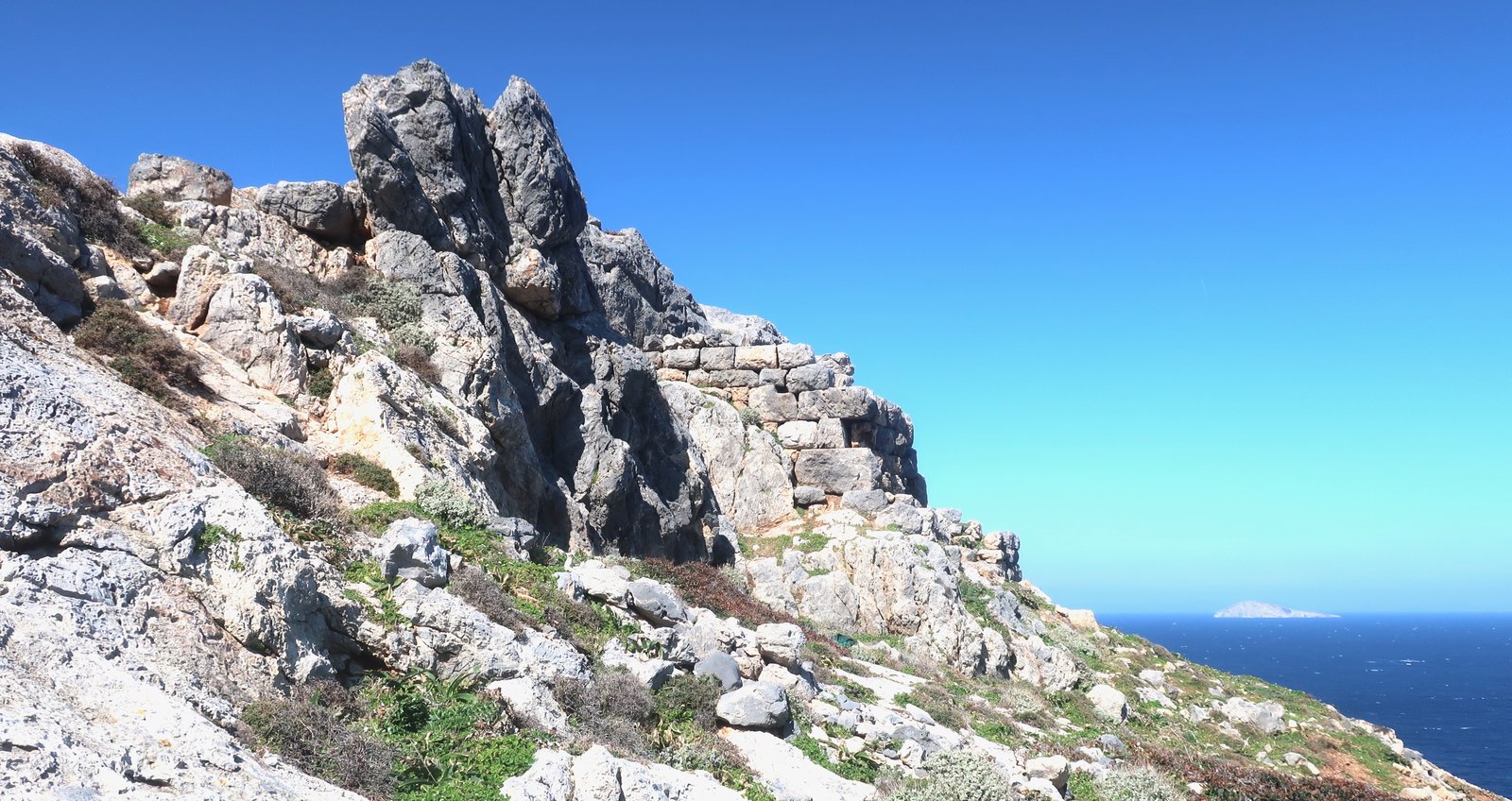
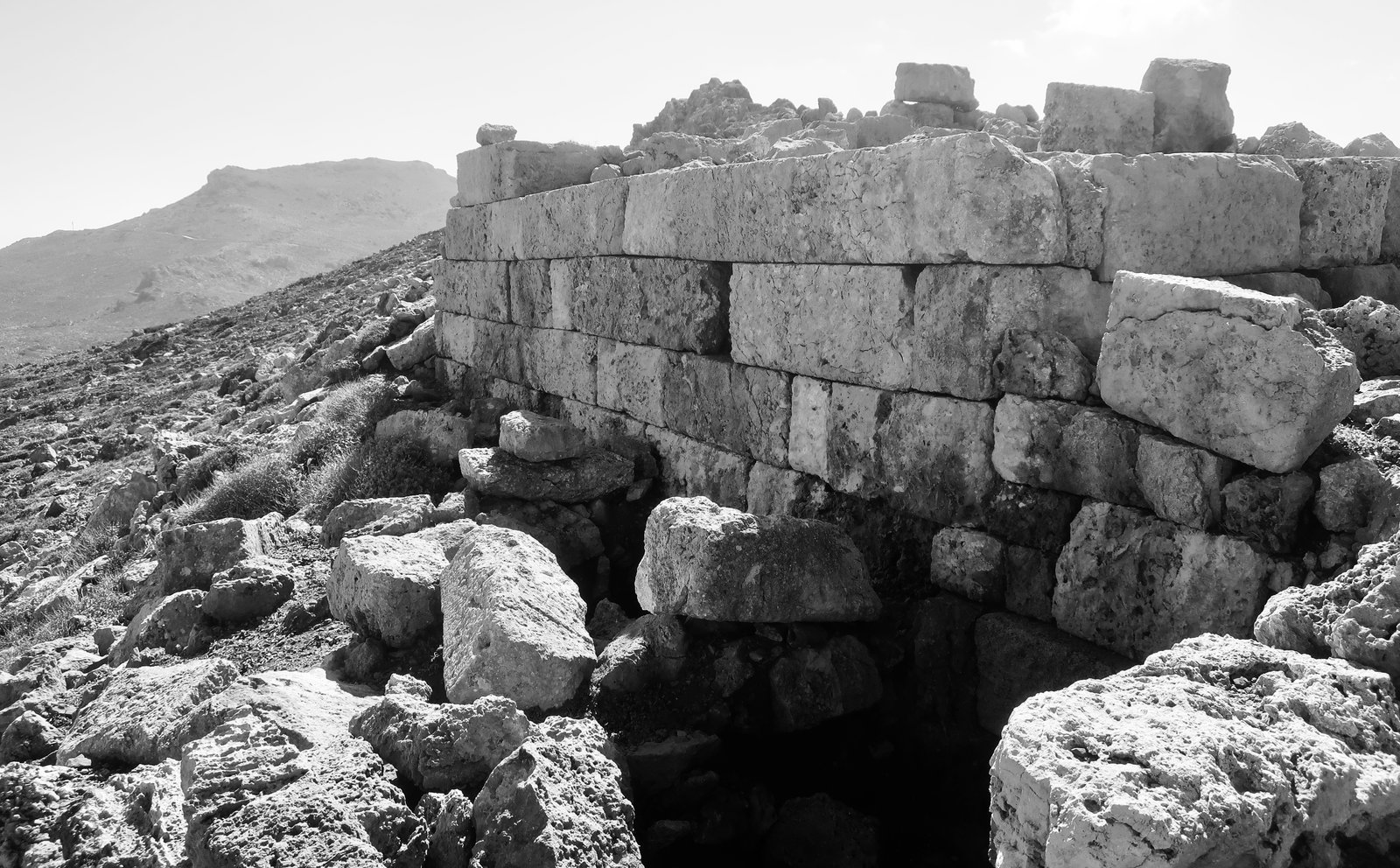
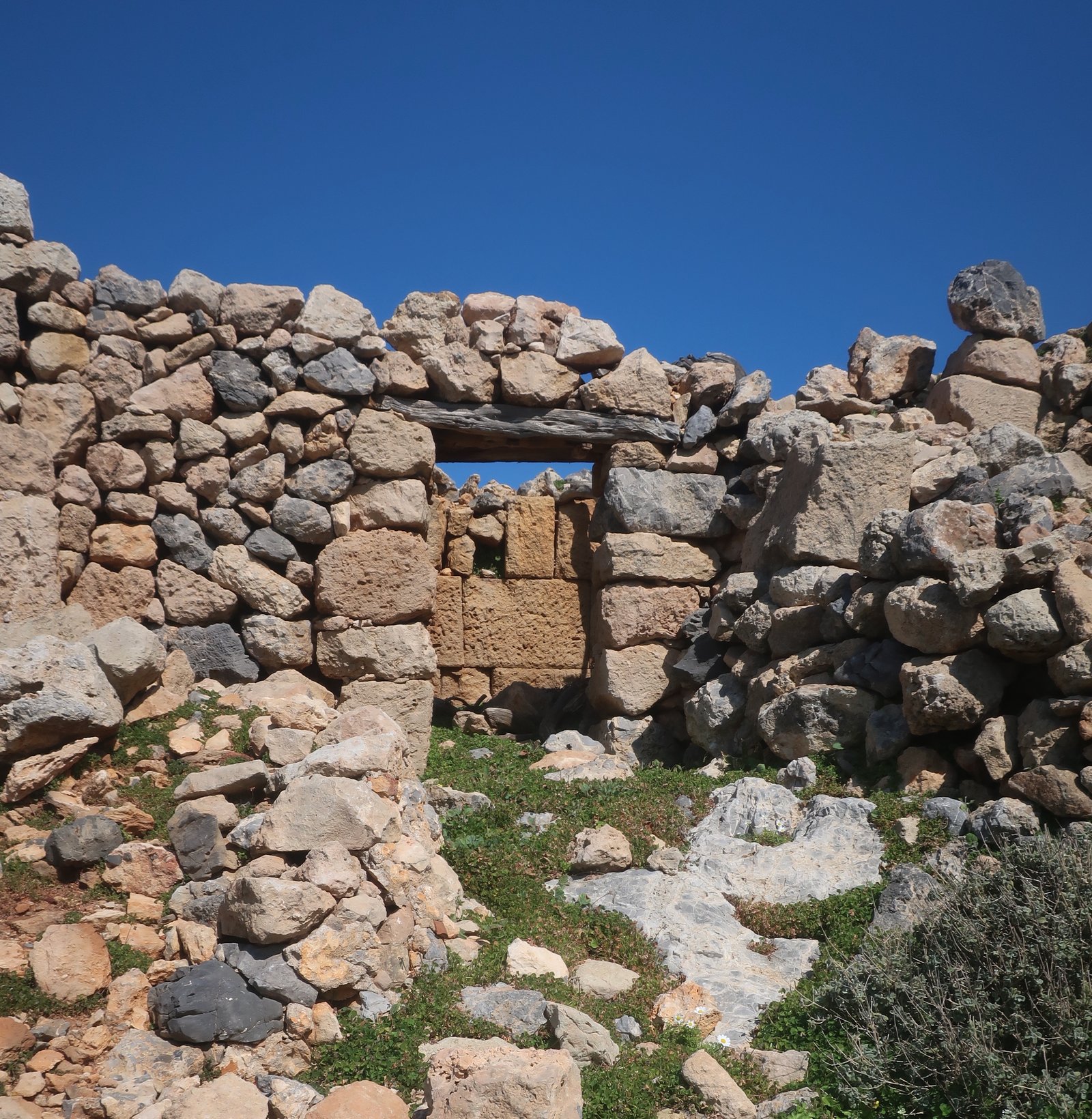
Some archaeological digging has been done. There are so many classical sites in Greece that very often the work of discovery is desultory, unfinished. Sites are treated like honey pots, the sweet and shiny items are taken from them to be deposited in a museum somewhere, the sites then left waiting on a hypothetical future opportunity, while grass and spike bushes grow back up over the stones, wind and weather continue their work.
Looking back from there, the village seems even smaller than it is. One of Greece’s very many hidden places, outside the normal orbit of things.
***
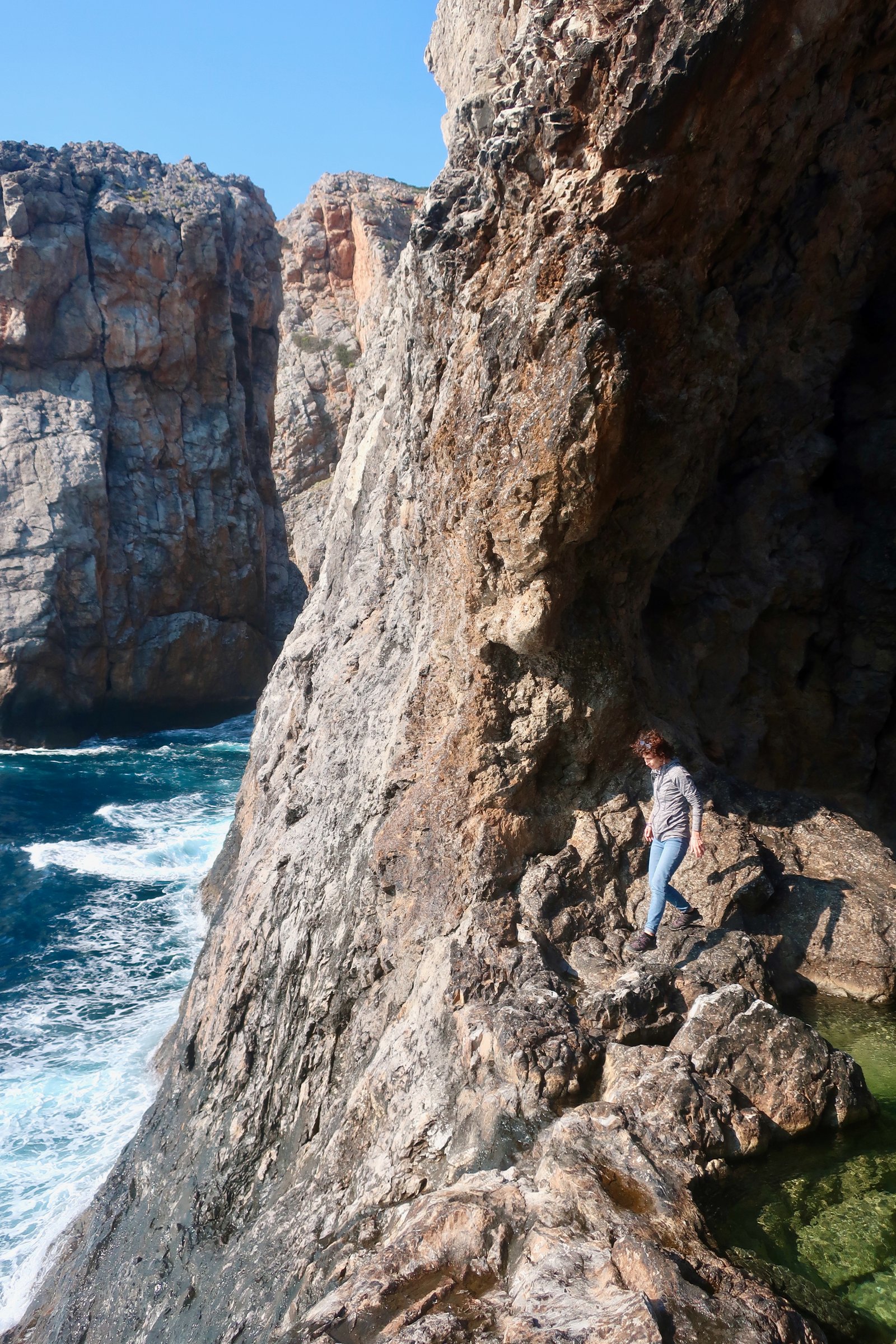
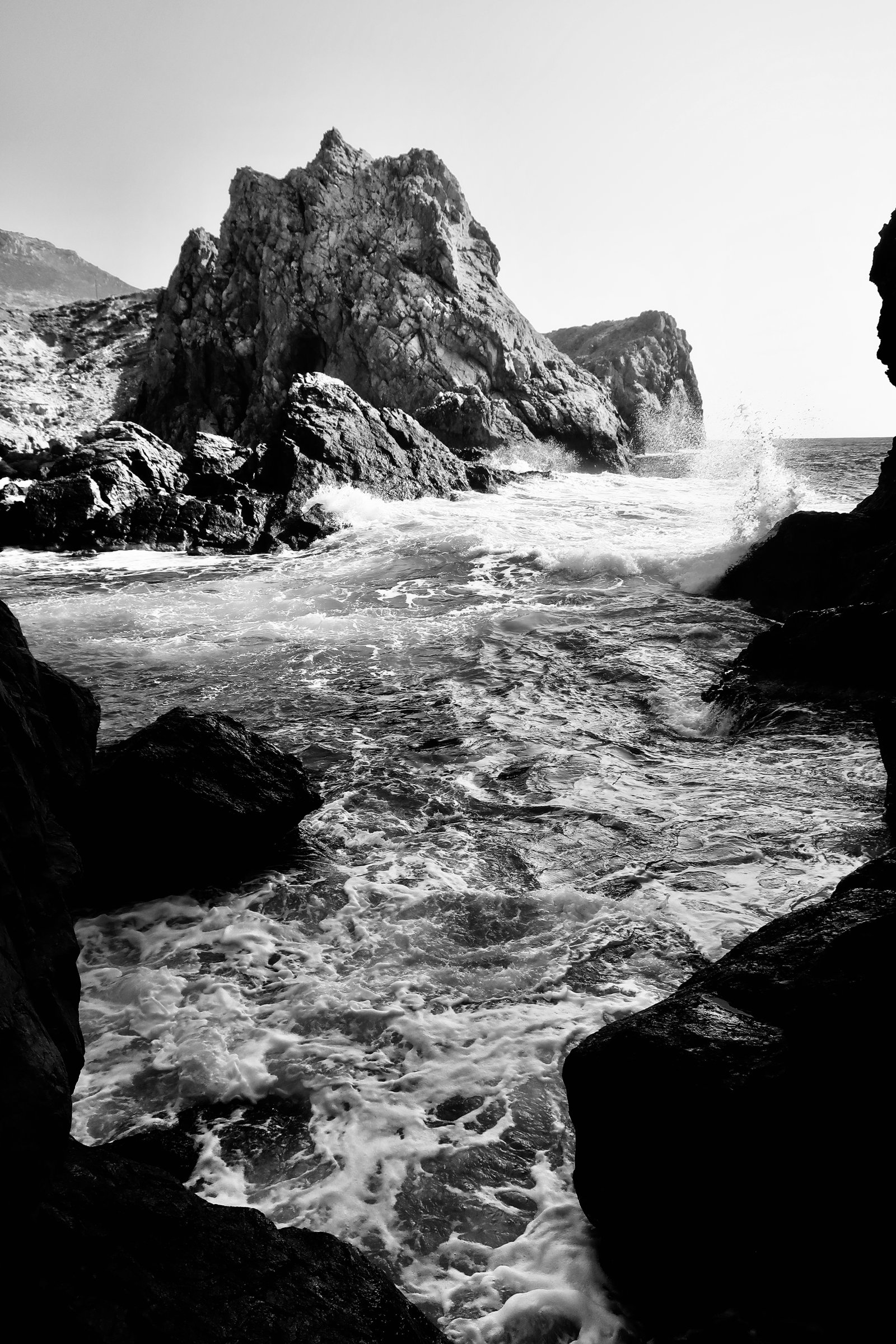
The house we rented was set on its own outside the village, on a small cliff-head looking west over the Ionian sea. Below, in a small, almost closed rocky bay, the sea breathed heavily in and out, deep swells and thundering heaves of water surging in through a narrow gap between rocks.
We paid ten euros for a small box of wood, thrilled to have an open fire, an unheard-of treat. Our host was apologetic. The boat charged me fifty euros to bring this load from Crete, she said, indicating a meagre pile.
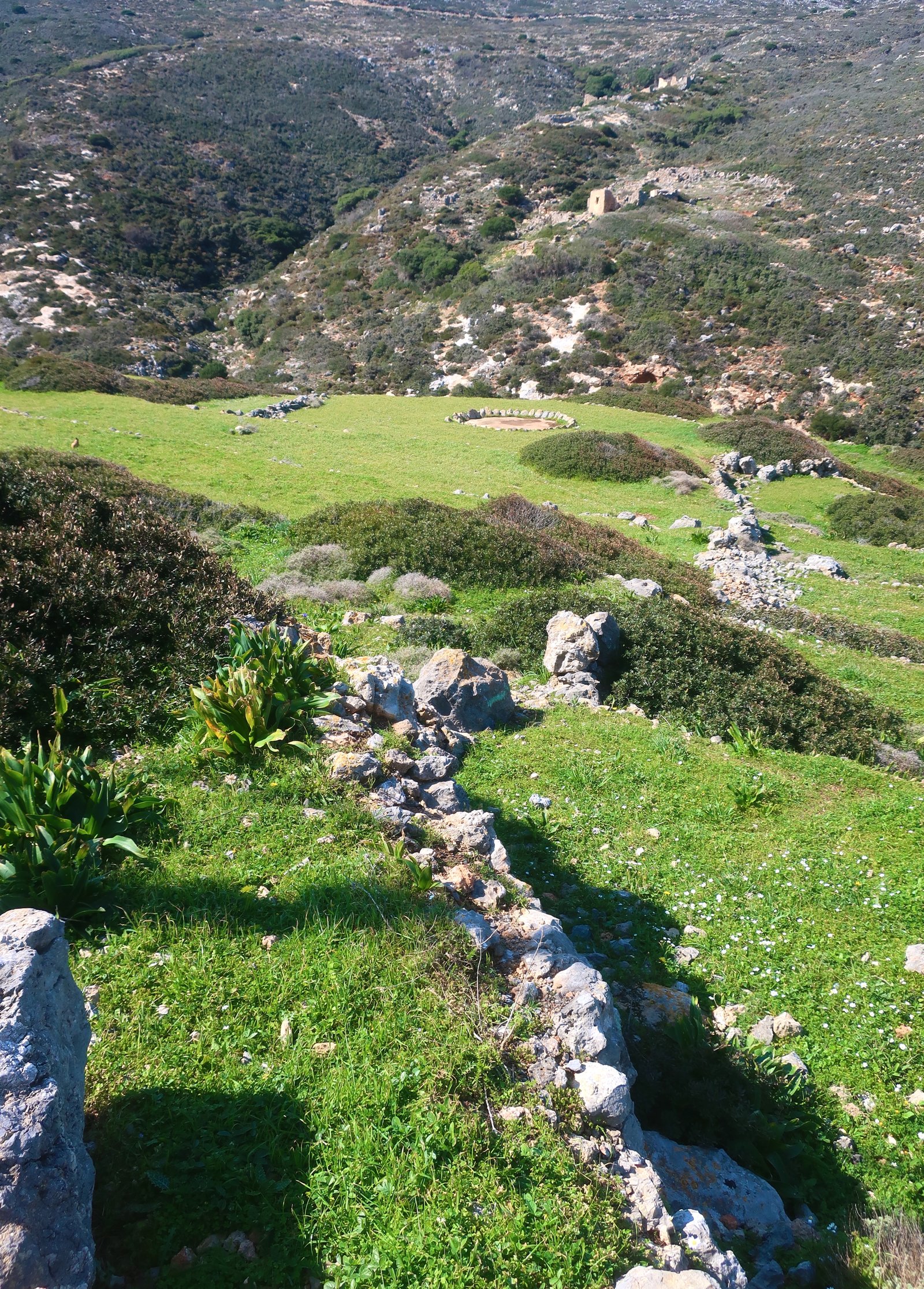
There are no marked hiking paths on Antikythera. There are a lot of wild goats, shaggier than most. There are ruined houses. There are traces of agriculture, the usual terraces, stone walls and threshing circles, evidence that at some time in the past there was more.
There’s the Antikythera Bird Observatory. The island is an important point of passage for birds migrating between North Africa and Europe. It has the world’s largest breeding colony of Eleonora’s Falcons, I have read. This may well be true. Just that, so many of the islands claim to have a special relationship with Eleonora’s Falcon, known to be rare. (Just as so many islands mention the possibility of spotting Monk Seals, equally, or even more elusive.)
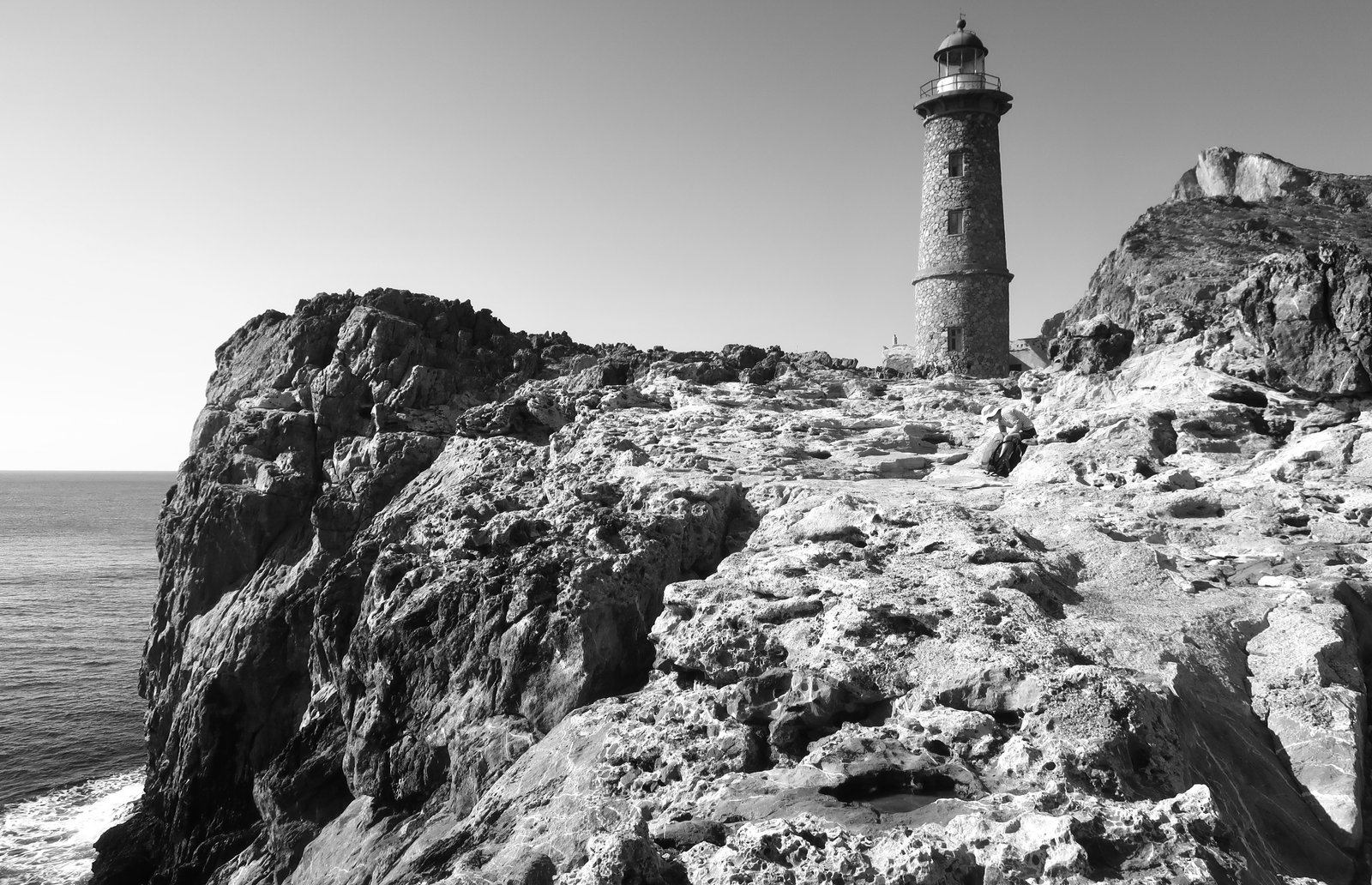
One day we walked to the lighthouse on the southern end of the island. Somewhere on the internet we read that it isn’t possible to go there, obviously not true. Rather it’s not exactly straightforward, but not too difficult either. You take a map, you follow goat-paths, walk where the land is not too spiky and not too steep.
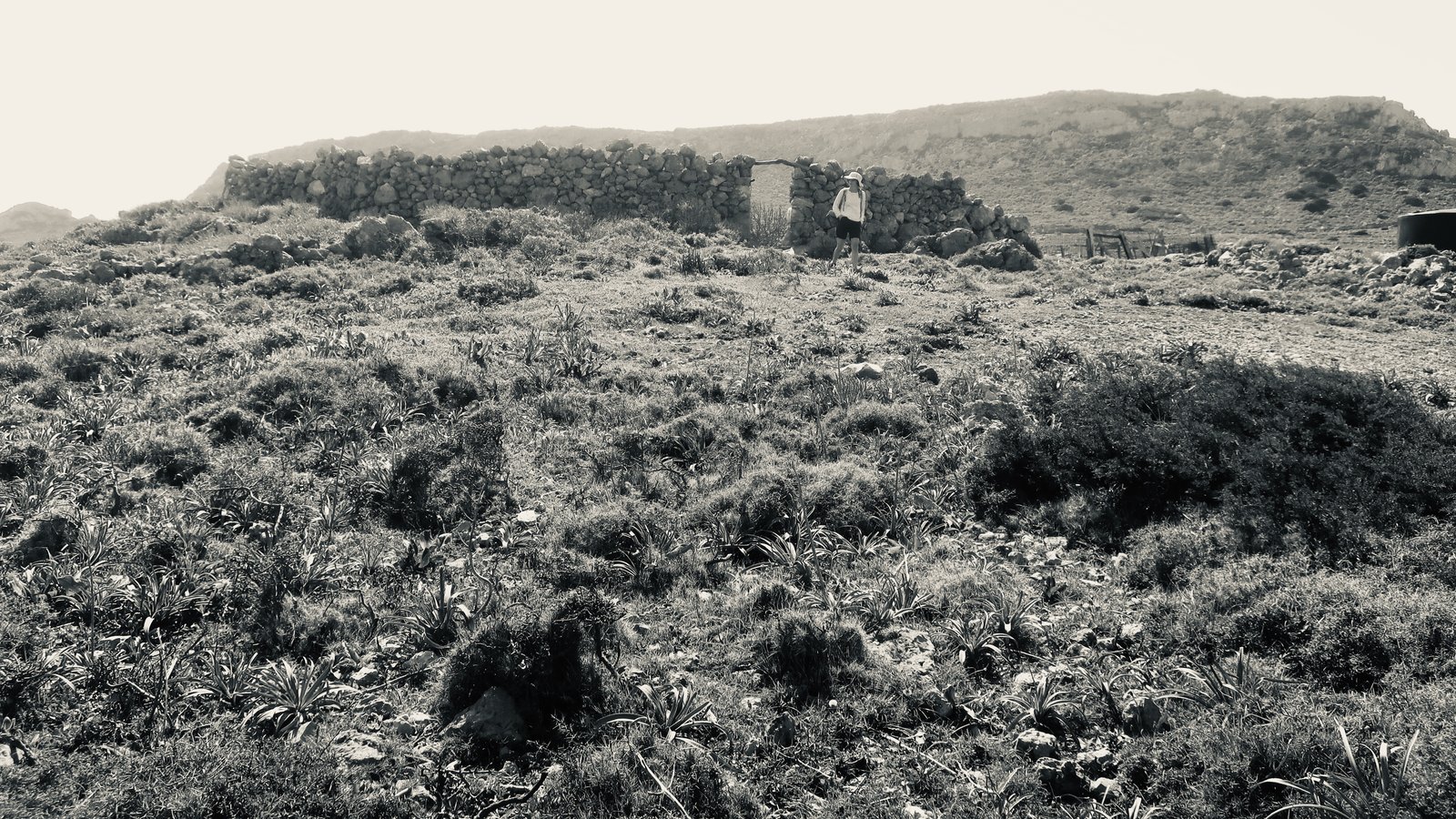
At one point we found ourselves very close to a cliff-edge. It sounds unlikely, to have not seen it coming. We were trying to go where the goats had gone, thinking they must know the way. But they have a much better head for heights than we do. The highest point on the island is only 378 metres, but a cliff doesn’t have to be miles high to make your head swim. At some point a goat-path will quite possibly do things only goats can do and you’ll be unable or unwilling to continue. Goat-paths criss-cross like the streams made by drops of water running down a window.
We had lunch at the end of the island by the lighthouse, an impressive, classic, storybook stone-construction, around which storybook children might play and fish and have adventures. After lunch we took a different non-path home.
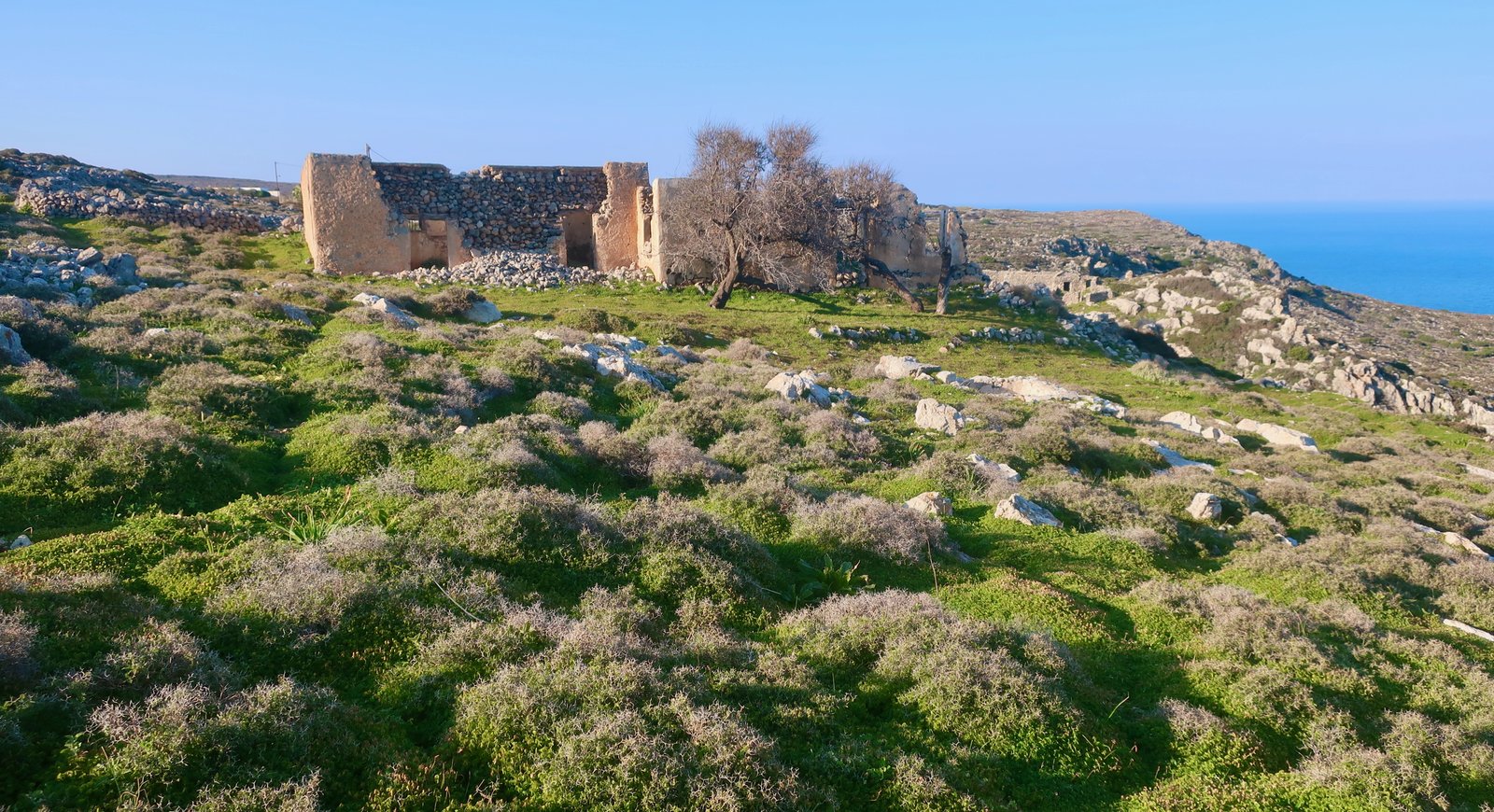
There are many ruined houses. There were green springtime fields of spike and grass and clover. The landscape is beautiful. There’s something quite heroic in these tiny places on which people have eked out lives for ever.
For the last half hour we were collecting wood for the fire and came home with armfuls of sticks. We saw no-one all day and were not aware of anyone having seen us.
That evening when we walked in to the shop the woman said to us,
Λοιπόν, πήγατε στον φάρο σήμερα.
So, you went to the lighthouse today…